
Reviewed · COOKING CLASSES
Cape Town: Bo-Kapp Walking Tour and Malay Cooking Class
Bo-Kaap is one of those places where the streets already tell stories, and this experience adds a second layer by turning that walk into a hands-on Cape Malay cooking class. I like how the neighborhood tour is led by real locals, with guides such as Ilyas or Gadija, who connect the architecture and community to what you see on the ground.
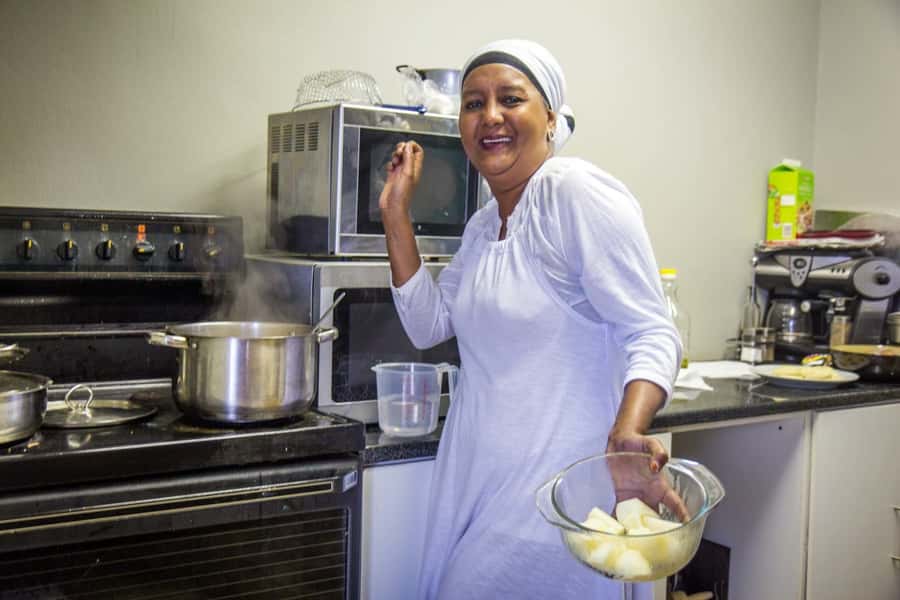
My favorite part is the food lesson with hosts like Fadela from Cooking with love, where you actually make the meal, including samosas and roti, instead of just watching. I also love the stop at a spice shop, where you learn practical uses and health benefits for the spices you’ll later cook with.
One thing to consider: the cooking space can be tight, so some stages may feel more like close work in small batches, rather than everyone always working side-by-side at the stove.
Key highlights to look for
- Meet at a purple house with flower pots on top, so you are not wandering around guessing
- Bo-Kaap sights on foot, including older buildings plus a look at the first and oldest mosque in South Africa and a cultural museum
- Spice shop stop with explanations that you can apply right back in your own kitchen
- Hands-on Cape Malay cooking like samosas, chicken curry, roti, salsa salad, and koesisters
- You leave fed and informed, with recipes shared after the class
- No alcohol, with water included as your drink
Bo-Kaap on Foot, Then Cape Malay in Your Hands
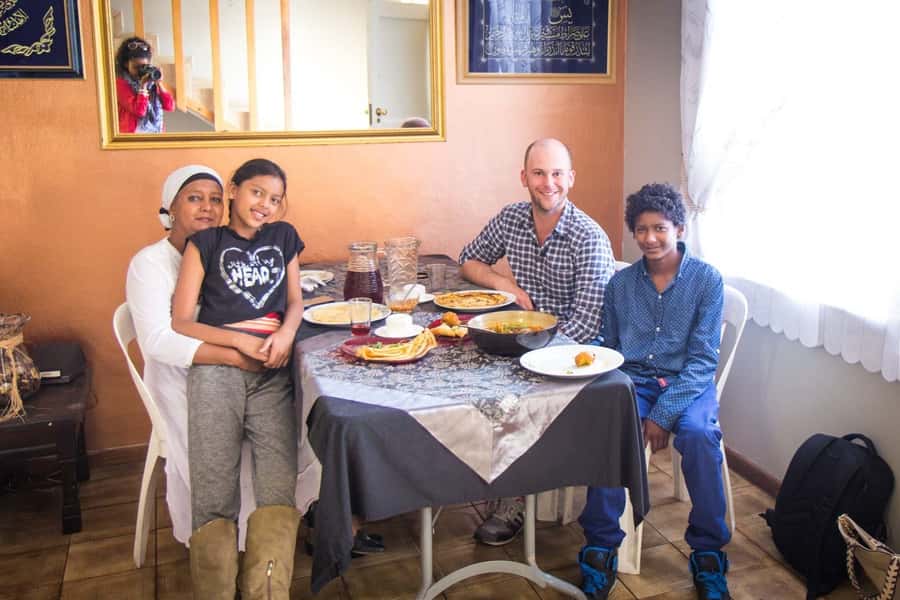
This is a great Cape Town choice when you want more than a photo stop. You start in Bo-Kaap, walking cobblestone streets lined with colorful houses, and you end at a local home where the day becomes practical, hands-on, and very social.
The walking portion matters because Bo-Kaap is not just pretty walls. The guide points out older historical buildings and explains the local culture and traditions, so the colors and community feel grounded, not staged.
Then the cooking class takes over the job of making it memorable. You prepare dishes that feel specific to Cape Malay tradition, and the best part is that you get involved.
More Walking Tours in Cape Town
- Cape Town: Nathi Langa Township Walking Tour
★ 4.9 · 493 reviews - Cape Town: Art, Culture & History Walking Tour
★ 4.9 · 392 reviews - Cape Town: Street Art Walking Tour in Woodstock
★ 4.8 · 293 reviews
Finding the Purple House and Knowing What to Bring
The meeting point is specific: you meet your host at a purple house with flower pots on the top. If you arrive early, take a moment to look around the street for that distinctive color, because it keeps the day from starting with stress.
Bring comfortable shoes. Bo-Kaap’s streets are cobblestoned, and you will be on your feet during the walking tour before you sit down to cook and eat.
Also plan for a 4-hour block that moves at a steady pace. This is not a sit-and-sip sightseeing ride. You are walking, learning, cooking, and eating in one flow.
The 4-Hour Route Through Bo-Kaap, the Mosque, and the Cultural Museum
The day begins with a cultural walking tour through Bo-Kaap’s historic streets. You will learn about the culture and traditions of the local people and visit some of the area’s oldest historical buildings.
A key stop is the first and oldest mosque in South Africa, along with time for a cultural museum (museum entrance is included). Even if you are not a big museum person, it helps you understand why Bo-Kaap developed the way it did, instead of treating it as a purely visual neighborhood.
The tour also includes a spice shop, which is more than a quick break. The guide explains the varieties of spices and how to use them, including health benefits. I like this because it sets you up for the cooking class. By the time you start working in the kitchen, the spices stop being names on a rack and start being flavors you can recognize.
On top of that, some versions of the walk include stops at local art and souvenir shops, with chances to meet people connected to the work you see. You also might notice messages painted on the fronts of some houses. The walk is mainly about history and place, not a lecture, and you will get the neighborhood context first.
The Spice Shop Lesson That Actually Changes How You Cook
If you care about food, this part is a sleeper hit. The spice shop stop is where the day becomes more useful for your life after Cape Town.
You are not just shown jars. You learn about different spices and their health benefits, plus how each spice fits into cooking. Later, when you are making curry and folding samosas, that earlier explanation helps you think in flavors, not steps.
A great practical tip: start recording when the guide brings out the spices. One person specifically recommended it so you can capture the guide’s explanations while they are fresh in your head.
Something different for the Cape Town list:
- Wine Tour: Paarl, Franschhoek & Stellenbosch incl 3 wineries
★ 5.0 · 3,940 reviews - Cape Town: Hop-On Hop-Off Bus Tour with Optional Cruise
★ 4.8 · 3,929 reviews - Cape Town: Cape of Good Hope & Penguins Day Tour with Pickup
★ 4.7 · 3,362 reviews - Zipline Cape Town – From Foot of Table Mountain Reserve
★ 5.0 · 3,179 reviews
Cooking Class in a Local Home: Samosas, Chicken Curry, Roti, and More
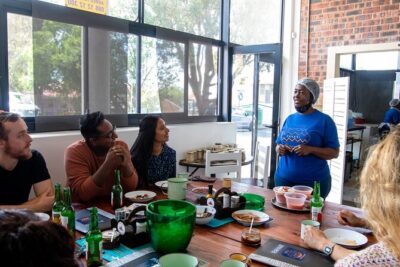
Now the fun part. You return to your host’s home and begin preparing the meal together. The class is interactive in a real way, with the pace and instructions geared toward getting everyone involved.
The course you start with
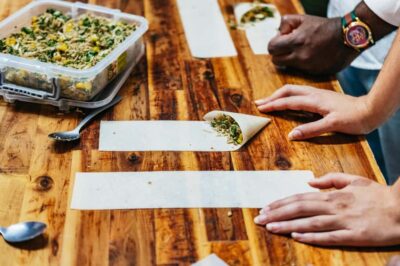
You begin with folding the first course, samosas. That is a big reason this class feels like more than a cooking demo. The technique is specific, and you are doing it, not just watching someone else do it.
The main meal
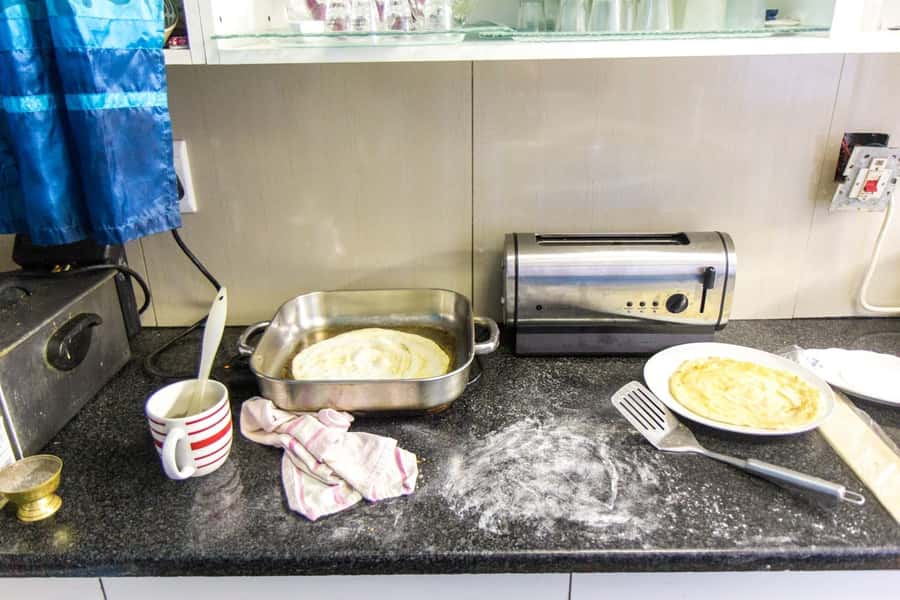
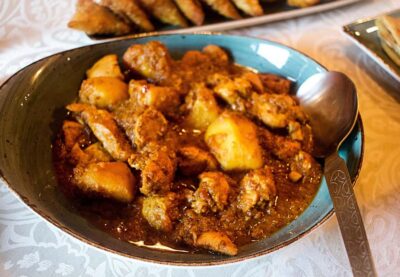
Next comes the main meal: chicken curry and roti. The roti part is especially satisfying because it is tactile. Even if you have never made roti from scratch, the process turns you from consumer into cook for the afternoon.
The salsa salad component
You will also make salsa salad (listed as samabal, better known as salsa salad). This is the kind of side that gives the plate contrast, especially against curry that leans warm and savory.
The dessert and tea
To finish, you eat koesisters, spicy savory donuts served with cardamom tea. It is a classic way to end a meal, and cardamom tea makes the whole experience feel complete, not like dinner with a random ending.
A note on space and pacing
One honest drawback: the cooking area can be small. Some sessions may mean working in small batches, so not everyone is hands-on at the exact same moment. The upside is that you still get instruction and you still eat the results of your work, and many people leave with recipes for the dishes they made.
Eating Together: Why Sharing the Meal Matters
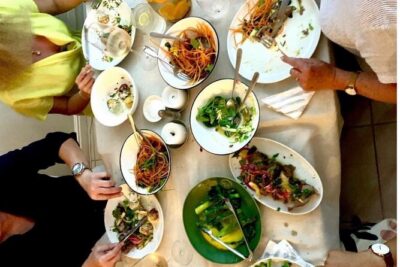
The biggest payoff for many people is the last step, sitting down to enjoy what you cooked together. It is not just about taste, although the meal is described as plentiful and very tasty.
It is also about the setting. Eating in a local home, with a host who explains what you are tasting, turns the meal into a cultural moment. You learn the “why” behind the food at the same time you learn the “how.”
You should also expect no alcohol. Water is included, and the class focuses on the meal and tea, not drinks.
Price and Value: Is $68 Worth It?
At $68 per person for a 4-hour experience, you are paying for two things: a guided walk with neighborhood context, and a hands-on class in a local home.
Here is where the value comes in:
- You get a real skill set you can practice later, especially if you want to make roti and curry from scratch.
- The spice shop stop adds value because it gives you cooking direction, not just a souvenir stop.
- You get museum entry included, so you are not just paying for the cooking component.
- You likely leave with recipes by email, which many people treat as the best souvenir.
If your travel style is mostly “see it, move on,” this can feel like a lot of time in one neighborhood. If your travel style is “learn, eat, and actually do something,” it is strong value.
Who Should Book This and Who Might Skip It
This fits best if you:
- Want a cultural experience that uses food as the language
- Like hands-on cooking and want to leave with repeatable skills
- Prefer small-group, interactive activities over big-bus sightseeing
It might not be the best fit if you:
- Hate close, shared kitchen spaces, since the area can feel tight
- Want a lot of free time for wandering on your own during the afternoon
Also, if you are traveling solo, this can be a confidence boost. The class format tends to encourage participation, and many people mention that everyone got involved.
Practical Tips to Make Your Afternoon Go Smoothly
Keep expectations simple and you will enjoy it more.
- Wear comfortable shoes for Bo-Kaap cobblestones.
- Be ready to cook, fold, and taste along the way, because this is interactive.
- Plan to eat a full meal, including curry, roti, salsa salad, and koesisters.
- If you have dietary needs, keep them in mind when you book, because some people say their dietary requirements were handled well.
- Bring your curiosity. The spice explanations include health benefits and multiple uses, which is where you can pick up ideas for your own pantry.
One last helpful mindset: do not worry if roti feels tricky. The point of this class is learning a process you can repeat later, not becoming a roti master on day one.
Should You Book Cooking with love in Bo-Kaap?
If you want a Cape Town afternoon that feels like you understand the place, not just pass through it, I think this is a smart booking. The pairing of Bo-Kaap on foot with a hands-on Cape Malay meal makes the day feel connected, and the guides such as Ilyas, Gadija, and Fadela bring energy that keeps it from becoming stiff or overly formal.
I would book it when:
- You are excited by cooking, especially curry, roti, and samosas
- You want neighborhood context plus practical food knowledge
- You like the idea of going home with recipes, not just memories
I would pause if:
- You dislike sharing a kitchen area and prefer lots of personal space
- You mainly want quick sights and lots of independent time
If that sounds like you, go for it. This is one of those experiences where the best part is not only seeing Bo-Kaap, it is bringing its flavors home.
FAQ
What is the duration of the Cape Town Bo-Kaap walking tour and Malay cooking class?
The experience runs for 4 hours.
How much does it cost?
It is listed at $68 per person.
Where do I meet the host?
You meet your host at a purple house with flower pots on top.
Is the tour guide English-speaking?
Yes, the live tour guide speaks English.
What should I bring with me?
Wear comfortable shoes.
What is included, and is alcohol provided?
Museum entrance fees and water are included. The experience notes that food and drinks are not included in the standard listing, and alcohol is not provided.
Is there a free cancellation option?
Yes. You can cancel up to 24 hours in advance for a full refund.
Newest reviews around Cape Town
- Cape Town: Half-Day Guided City Sightseeing Tour by Bus★ 4.8 · 7 reviews
- Cape Town to Cape Point Private Day Tour★ 4.5 · 7 reviews
- Abseiling Table Mountain★ 5.0 · 7 reviews
- Table Mountain Group Hike – Solo Travelers welcome★ 4.1 · 7 reviews
- Private Tour:Cape of Good Hop>Chapman’s >Penguin>Seal island★ 5.0 · 7 reviews
- Pre-Booked Ticket Robben Island Half-Day Tour from Cape Town★ 2.8 · 7 reviews
- Cape Town Airport and Hotel Private Transfers★ 5.0 · 7 reviews
- Table Mountain, Boulder’s Penguins & Cape Point Private Tour★ 4.5 · 7 reviews
Cooking Classes, compared.
Half-Day Small Group Cooking Experience in Franschhoek
Read our review →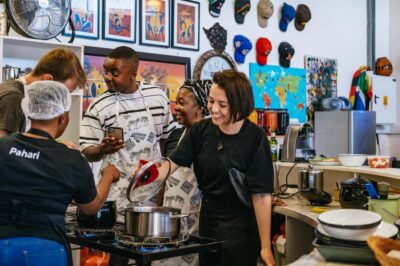

Private Cape Malay Cooking Class in Cape Town with a Local Family
Read our review →
GQ: City Walking Tour & African Cuisine Cooking Class
Read our review →
South African Cooking in Cape Town with Local Chef Richard
Read our review →Browse the lists this tour appears in