
Reviewed · SOWETO TOURS
Johannesburg Soweto Highlights Tour
Soweto is one of those places where you can feel the weight of the past and still see people living, moving, building a future. This private highlights tour helps you check off the big landmarks in a single day, without spending hours figuring out routes and timing.
I love that you get pickup and ride in an air-conditioned vehicle, which matters when Johannesburg traffic and sun decide to be extra. I also like the mix of sights, from stadium history and Nobel Peace Prize homes to memorials and even the scale of Baragwanath Hospital. The one thing to consider is that a packed day means you may not get long stays at every stop, especially if you also want optional entrances that are not included.
If you book with the right mindset, this tour is ideal for a first visit to Soweto and for anyone who wants context, not just photos. And you’ll be glad it’s private, so you can ask questions and set your pace, instead of watching the group shuffle forward like a timetable.
Key points before you go
- Private and flexible for your group, with pickup and an air-conditioned vehicle
- Mandela and Tutu links everywhere, from Vilakazi Street to Mandela House and beyond
- FNB Stadium details include Mandela’s 1990 speech and the stadium’s 2010 rebuild
- Orlando Towers connect industrial infrastructure to public art and extreme sports
- Memorial stops focus on 1976 student protests and the road toward democracy
- Real-life Johannesburg scale shows up at Chris Hani Baragwanath Hospital
How the 1 to 5 hour Soweto highlights day actually works
This is built to be efficient. The tour runs about 1 to 5 hours, so the exact timing depends on how much time you want at each stop and whether you choose optional museum time where tickets apply.
You’ll start with pickup from your chosen location, like your hotel or a train station. Then you’ll move between key Soweto landmarks in a vehicle with air-conditioning, plus bottled water. Many stops have admission ticket free, while a couple of major museum sites have ticket rules that affect what you budget.
Because it’s a private tour, the route can feel smoother. But “highlights” still means short stops. If you have one must-see, tell your guide early so it does not get squeezed out by timing.
More Soweto tours:
- Johannesburg: Hop-On Hop-Off Bus with Optional Soweto Tour
★ 4.6 · 985 reviews - Soweto /Johannesburg and Apartheid Museum Guided Full Day Tour
★ 5.0 · 932 reviews - Johannesburg Hop-On Hop-Off City Tour with Soweto Option
★ 4.5 · 768 reviews
FNB Stadium, aka the Calabash, and Mandela’s 1990 signal
FNB Stadium is hard to miss, and its story is even harder to forget once you connect the dots. You’ll hear it nicknamed the Calabash or African Pot, a look that comes from the stadium’s major rebuild for the first African World Cup in 2010.
The political history here is powerful. The venue was called Soccer City before it became FNB Stadium, and it hosted historic events connected to Nelson Mandela. One detail worth holding onto: Mandela made his first speech in 1990 a few days after his release from prison, setting the tone for the transition many people hoped for.
On the sports side, this is the kind of stadium that has hosted national and continental finales, including the 2010 FIFA World Cup opening and closing ceremonies and the final, plus the Africa Cup of Nations final in 2013. If you only know stadiums as entertainment, this stop upgrades your mental map of what a sports arena can represent.
Practical note: you’ll likely spend around 20 minutes here, and admission is listed as free for the stadium ticket on this stop. Still, this is the sort of place where you may want to take a slow look from a few angles.
Diepkloof Park and the housing story behind the neighborhood names
Diepkloof Park gives you a different kind of Soweto view. It’s not the postcard center. Instead, it’s about how space, class, and government policy shaped daily life.
You’ll hear locals refer to areas here as Rich Man’s Acre, with stands that are bigger and meant for a more exclusive setup. The tour framing also highlights Diepkloof Extensions, built for middle to upper class Black residents, including professionals employed by the state and some privately employed professionals. A key point: the housing scheme offered 100% loans for stands and structures.
That’s the kind of detail that changes how you see a neighborhood. You start noticing that apartheid-era planning was not only about segregation. It was also about control of opportunity, housing stability, and who got better infrastructure.
This stop is short, about 20 minutes, with admission marked as free. Give yourself a moment to watch what’s around you rather than treating it like a drive-by.
Orlando Towers: sewage cooling, massive murals, and adrenaline platforms
Orlando Towers is one of those Soweto landmarks that feels strange until you understand the logic. The two cooling towers became a prominent Soweto sight, built in 1951 to support the spray pond cooling system. The tour explains that spray ponds were reaching capacity, so the towers were added to keep the industrial setup running.
Here’s the unusual connection you’ll probably remember: the cooling was supplied using sewage effluent from the Klipspruit Sewage Works, and the spray ponds at Orlando were among the first in South Africa to make use of that ready supply of coolant liquid.
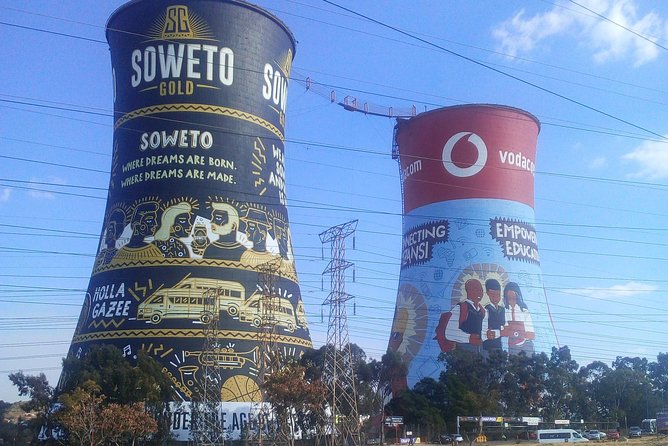
One tower is painted for advertising, and the other houses the largest mural painting in South Africa. That contrast, industrial roots plus public art scale, is part of why Orlando Towers keeps drawing attention.
And then there’s the extreme-sport angle. The towers are also used for bungee and BASE jumping, including jumps from a platform between the top of the two towers, plus a bungee swing into one tower. The towers even appeared on the Amazing Race in a Fast Forward segment.
This stop is listed at about 20 minutes, admission free. If you are not into adrenaline, you can still enjoy it as a piece of working infrastructure that grew into a landmark.
Put these Johannesburg options head to head
- From Johannesburg: Pilanesberg Nature Reserve Game Safari
★ 4.8 · 1,327 reviews - Full Day Ultimate Pilanesberg National Park Safari from Johannesburg or Pretoria
★ 4.5 · 718 reviews - Half-Day Tour of Soweto Tour
★ 4.5 · 712 reviews - Soweto: Walking Tour with a Local Guide and Lunch
★ 4.9 · 648 reviews
Vilakazi Street and Mandela and Tutu at Nobel Peace Prize scale
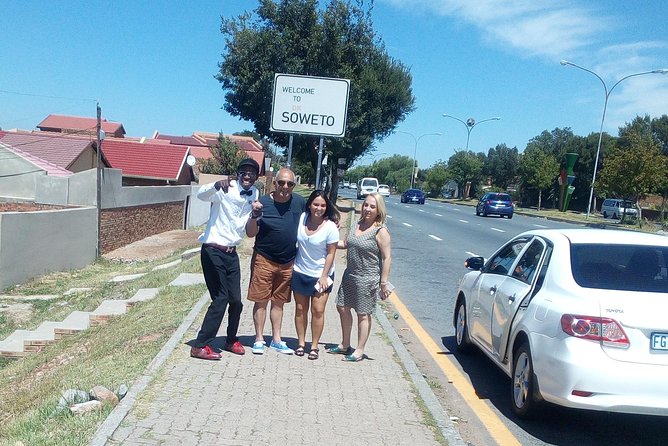
Vilakazi Street is the kind of place that gives you chills for a reason that is simple. The homes of two Nobel Peace Prize laureates are located here: Nelson Mandela and Archbishop Emeritus Desmond Tutu. The tour notes that Vilakazi Street is the only street in the world with two Nobel laureates as residents.
The street is also named after Dr Benedict Wallet Vilakazi, a writer and educator linked to Zulu literature, including writing the first poetry book published in Zulu. That matters because it frames Vilakazi Street not only as a memorial corridor, but as a cultural landmark in its own right.
Expect about 30 minutes for this stop, with admission listed as free. You are walking through lived-in legacy, not a theme park. Keep your voice low in residential areas and treat drive-by photos as a bonus, not the main event.
Mandela House: the modest home behind the world figure
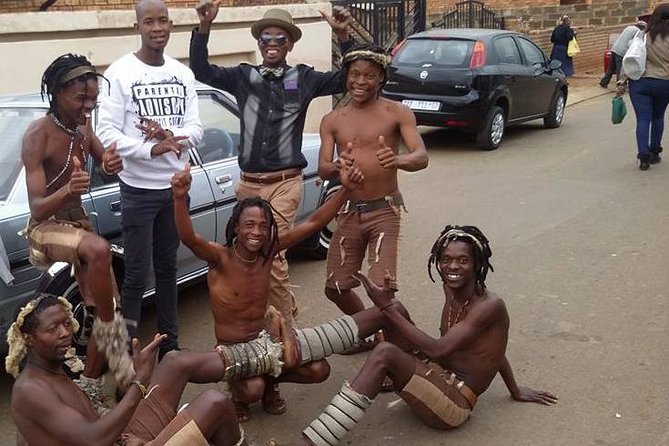
Mandela House is on Orlando West, on the corner of Vilakazi and Ngakane streets. The tour focuses on how Mandela and his family lived here from 1946 to the 1990s, which is long enough to make the house feel less like a museum and more like an anchor point in real life.
The story is human, not just heroic. You’ll hear Mandela lived here with his first wife, Evelyn Ntoko Mase. After their divorce, he lived there with his second wife, Winnie Madikizela-Mandela.
There’s also a sobering timeline. The tour explains Mandela did not spend much time here once his role in the anti-apartheid struggle grew, because he went underground before his arrest in 1962. Madikizela-Mandela continued living in the house with their two daughters, Zenani and Zindzi, until she was banished in 1977 to Brandfort in the Free State.
After Mandela’s 1990 release, the tour notes he returned to the house for 11 days, then moved to a larger and more secure place.
This is a stop where the time feels heavy. It’s listed at about 30 minutes, and importantly, admission is marked as included for Mandela House. That’s good value because you are not stuck paying extra at the door for one of the major stops.
Hector Pieterson Museum and Memorial: the June 16, 1976 protest route
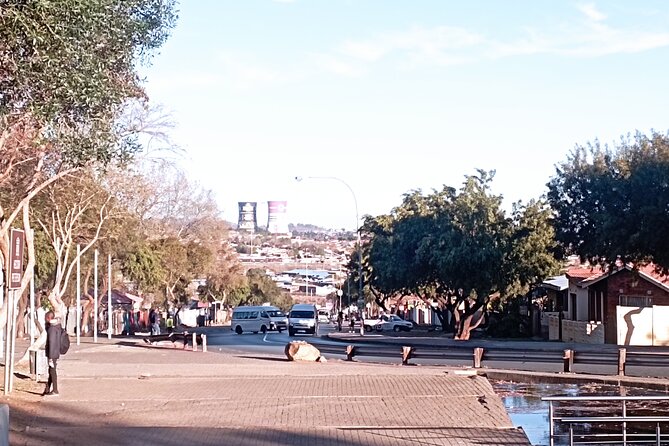
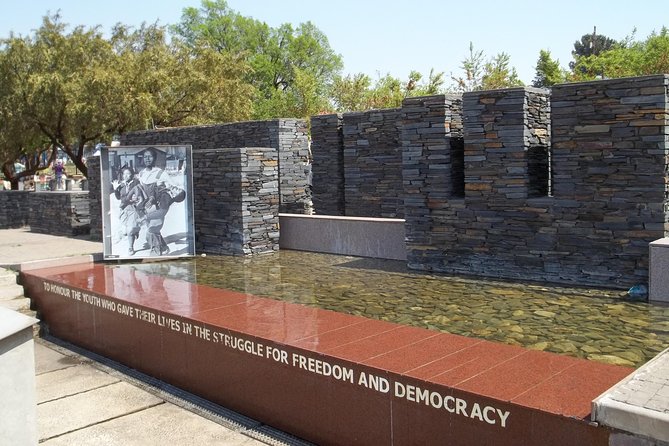
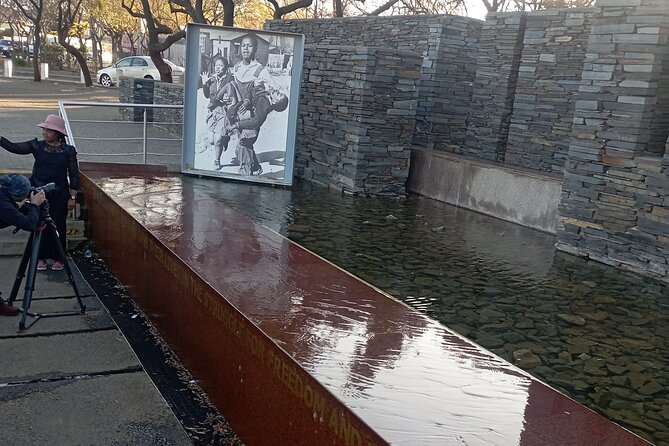
The Hector Pieterson Museum and Memorial is where Soweto becomes unmistakably political and personal. The key moment is June 16, 1976, when Soweto high school students protested the mandatory use of Afrikaans in black secondary schools.
The tour explains their plan as a route with purpose. Students planned to meet at Orlando Stadium and then march to the regional offices of the Department of Bantu Education, aiming to raise grievances with authorities.
The placards included messages like Away with Afrikaans, Amandla awethu (Power to the people), and Free Azania. They also sang Nkosi Sikelel’ iAfrika, now the basis of South Africa’s national anthem.
It’s listed for about 45 minutes. Admission for this stop is marked as not included, so it’s the one place you should budget for if you want to go inside. Even if you do not enter every area, the memorial context is a big part of why this whole tour makes sense.
If you want the day to feel meaningful, this is where you slow down.
Constitution Hill Human Rights Precinct: from prison to the Constitutional Court
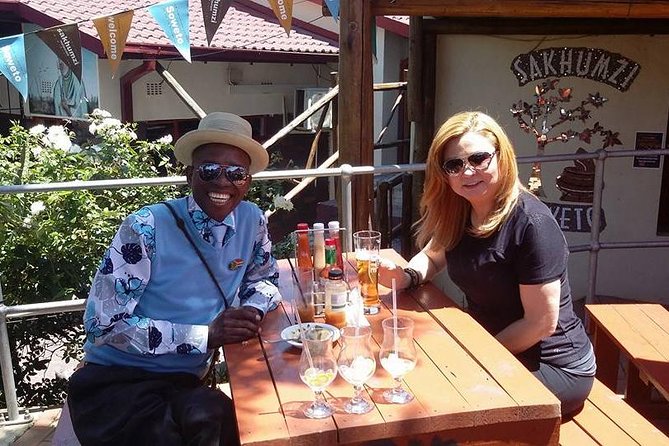
Constitution Hill is described as a living museum that tells the story of South Africa’s journey toward democracy. The grounds are tied to the country’s turbulent past, including a former prison and military fort.
Today, it is home to the Constitutional Court, which endorses the rights of citizens. That transition from incarceration site to rights institution is the message you’ll want to carry out with you.
This stop is shorter, about 30 minutes, and admission is marked as not included. So you’ll likely have a choice: focus on the core areas you can get to in your time window, or plan to pay the entry if you want deeper museum access.
This is also a stop where respectful behavior matters. The setting is serious even if you’re traveling with a group.
Chris Hani Baragwanath Hospital: scale, emergencies, and why it’s part of the route
This is not a typical tourist attraction. It’s a major working hospital, and the numbers the tour shares make that clear fast.
Chris Hani Baragwanath Hospital is described as the 3rd largest hospital in the world, covering about 173 acres and roughly 3,200 beds. You’re told the facility sits across 429 buildings and employs about 6,760 staff.
The tour also includes the hospital’s workload. It states around 70% of admissions are emergencies, with about 160 victims of gunshot wounds per month. Accident, emergency, and ambulance represent the busiest services, and the daily patient count is listed as over 350 daily. Yearly, the hospital sees about 150,000 inpatient and 500,000 outpatient cases.
The stats go further into specialized care too. The Department of Ophthalmology plus St John Eye Hospital is described as having 111 beds with about 50,000 patients per year. Maternity care is listed at around 60,000 patients per year.
You may only get a brief viewing time here, but it lands differently than the memorial stops. It shows how big systems in Johannesburg affect real people’s daily lives, not only the past.
If you choose to stop here, prepare yourself for a heavy emotional tone. Bring that in mind so the rest of the day does not feel disconnected.
Braamfontein and the Mandela Bridge, plus Newtown’s science and power-station bones
After Soweto-focused stops, the tour widens to Johannesburg city areas. Braamfontein is framed as a creativity zone, with public art installations and colorful graffiti murals.
Next comes the Mandela Bridge. The tour notes Johannesburg has the largest cable-stayed bridge in southern Africa, and it connects Braamfontein and the north of Johannesburg to Newtown, crossing 42 operational railway lines over a 284-metre-long span.
That’s a practical landmark too. Bridges like this are about movement, commuter flow, and city engineering, not just views.
The Newtown area is where the tour adds culture and learning stops. You’ll be pointed to Sci-Bono, described as a world-class science centre supporting maths, science, and technology education, with innovative learning experiences aimed at building science, engineering, and technology capacity in South Africa.
Then you’ll hear about Turbine Hall, built between 1927 and 1934. It began as the largest of Johannesburg’s three steam-driven power stations, and now it’s an iconic building in Newtown’s art and culture precinct.
Even if you don’t enter buildings, these stops give you contrast. Soweto shows the legacies of resistance and policy. Newtown shows the city investing in learning, arts, and reuse of industrial spaces.
Downtown history stops: Mandela and Tambo, plus Ferreira’s mine stope
The tour also includes brief downtown history touches that help explain why Johannesburg matters beyond Soweto.
One stop references the attorneys office with a brass plate reading Mandela and Tambo, described as the first black-owned law firm, active in late 1952. The idea is to connect legal work, political organizing, and the broader anti-apartheid struggle.
Another stop is Ferreira’s mine stope in the basement of the Standard Bank headquarters in downtown Johannesburg. It’s described as one of the very first gold prospecting sites, discovered during construction of the building in the 1980s, then preserved as a small museum entrance named for Ignatius Phillip Ferreira.
These can be quick visits, listed as about 10 minutes where the tour includes them. But they help you understand the economic engine behind the city, including why apartheid and labor systems were so tied to extraction and money.
Price and value: what $113.32 buys you in a private day
At $113.32 per person, the value depends on how you compare it to doing this solo.
You get private transportation, an air-conditioned vehicle, bottled water, and all fees and taxes are listed as included. Pickup is offered, and it’s a private tour with only your group participating, which is where small-group value often improves. The tour also uses a mobile ticket option.
What you do not get is lunch, so you should plan your midday meal separately. Also, not every major stop has admission included. Mandela House is included, while Hector Pieterson Museum and Constitution Hill are not included, so your total day cost can change based on what you enter.
For a first day in Johannesburg, I like this price point when you want structure. If you already love DIY exploring and have a strong sense of local transport, you could spend less. But for many people, paying for a guide, a vehicle, and tight routing is worth it.
One more thing: this tour is often booked about 43 days in advance, which suggests it’s a popular fit for first-timers. That timing also hints at why you should lock in your day early if you have limited time.
Should you book this Soweto highlights tour?
I think you should book if your goal is a high-impact introduction to Soweto and Johannesburg without wasting your vacation hours on logistics. This is especially strong if you want Mandela and Tutu landmarks connected in a single flow, plus memorial sites that explain why 1976 matters and why democracy required institutions like the Constitutional Court.
I’d skip it or plan differently if you want a slow, deep visit where you can linger at every site. With a route this packed, you need to choose. Tell your guide what matters most, whether that is extra time at Mandela House, longer museum time at the Hector Pieterson Museum, or a deeper look at Constitution Hill.
Also, confirm your priorities early if you care about a specific extra stop like Regina Mundi church, because time pressure can affect what fits in a highlights-style schedule. And if you want detailed storytelling, ask your guide questions on the first few stops so you can gauge how the rest of the day will feel.
FAQ
What’s included in the Johannesburg Soweto Highlights Tour?
The tour includes private transportation, an air-conditioned vehicle, bottled water, and all fees and taxes.
Is lunch included?
No, lunch is not included.
How long does the tour take?
The duration is listed as about 1 to 5 hours.
Do you offer pickup?
Yes. Pickup is offered from your preferred location, such as your hotel or a train station.
Are admission tickets included for all stops?
No. Mandela House is listed as ticket included, while Hector Pieterson Museum and Constitution Hill are listed as not included. Several other stops are listed as admission ticket free.
Is this a private tour?
Yes. It’s private, and only your group will participate.
Can I get a full refund if I cancel?
Yes. You can cancel up to 24 hours in advance for a full refund. If you cancel less than 24 hours before the start time, it is not refunded.
Newest reviews around Johannesburg
- Johannesburg: 3-Day Panorama Tour with Kruger Park Safari★ 5.0 · 7 reviews
- Drakensberg Mountains. Tugela Gorge and Amphitheater Hike★ 5.0 · 7 reviews
- 5-Day Kruger National Park Safari including Breakfast and Dinner★ 4.5 · 7 reviews
- Aerial cableway Hartebeespoort Halfday tour★ 4.5 · 7 reviews
- Soweto Township Tour★ 5.0 · 7 reviews
- Private Safari Tour: Pilansberg National Park Big 5★ 5.0 · 7 reviews
- Historical and Cultural Interactive Experience of Soweto★ 5.0 · 7 reviews
- Soweto Tour★ 5.0 · 7 reviews
Soweto Tours, compared.
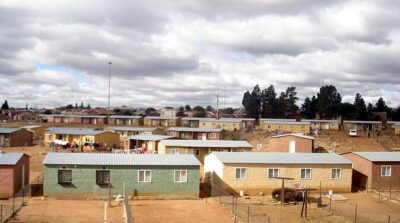
Soweto /Johannesburg and Apartheid Museum Guided Full Day Tour
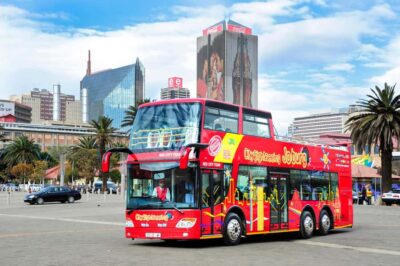
Read our review →Johannesburg Hop-On Hop-Off City Tour with Soweto Option
Read our review →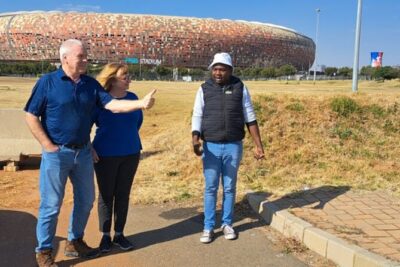

Jo’berg in 1 Day: Soweto, Apartheid Museum & City Tour
Read our review →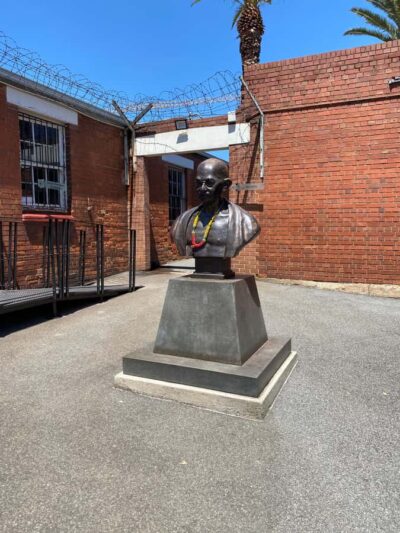
Full-Day Tour with Soweto and Apartheid Museum
Read our review →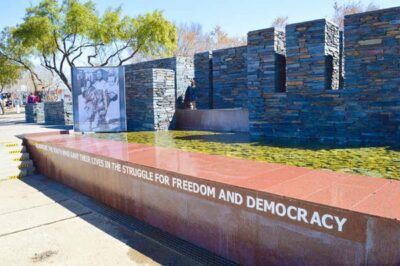
Browse the lists this tour appears in