
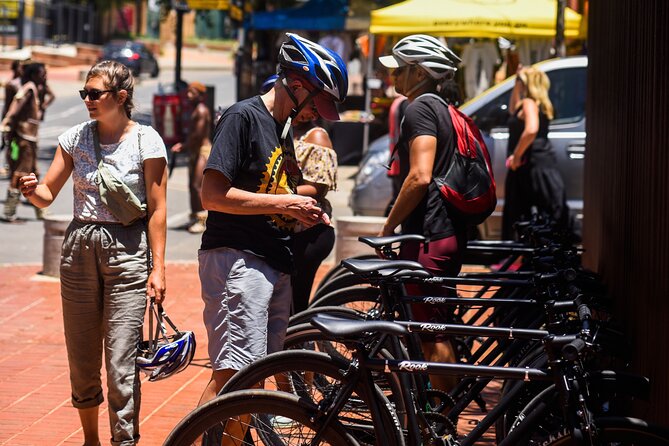
Reviewed · SOWETO TOURS
Guided Bicycle Tour of Soweto with Lunch
Soweto comes at you fast, and this guided bicycle tour is a smart way to absorb it. I like how you cover more ground than a walking tour while staying close to everyday city streets, and I also like the focus on the people behind the change, including women like Lillian Mgoyi and the 1976 youth uprising. One catch: this area is hilly, so your legs will do some work, and you should make sure you’re comfortable on the bike your group gets.
What makes the experience click is the way the guide ties stops together into one story, from family generations in Phomolong to hostel life in Mzimhlophe and the memorial sites that mark major turning points. Guides like Thabo and Themba are singled out for making the group feel safe and welcome, and for explaining what you’re seeing in a way that lands. You also get a proper break built in with a deep-filled kota sandwich lunch plus bottled water.
Key highlights at a glance

- Bike your way through Soweto’s key anti-apartheid sites, without being stuck on just one small block
- Vilakazi Street, Mandela’s home area, plus a stop linked to Nobel Peace Prize connections
- Domestic worker hostel stop in Mzimhlophe, a window into everyday life under apartheid
- Mama Lillian Mgoyi’s home area, including her role in major women’s marches
- Hector Pieterson Museum and Memorial, focused on the 1976 youth uprising
- Orlando’s big landmarks like Orlando Stadium and the Orlando Police Department
Why cycling Soweto works better than pacing on foot
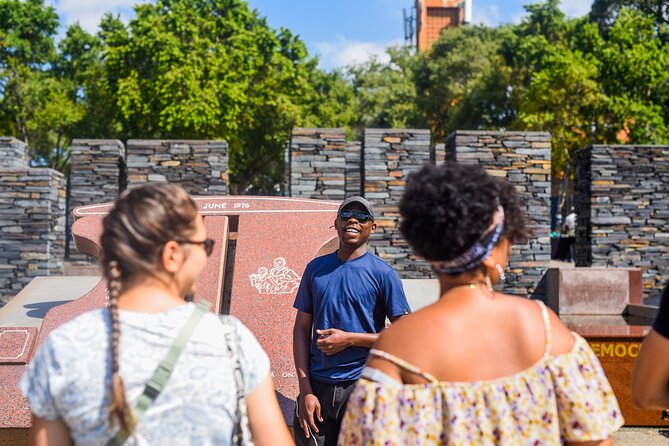
If you only see Soweto from one angle, you miss how neighborhoods connect. On a bike, you can move between sites that would take a long time to reach on foot, yet you’re still traveling through streets that feel real and lived-in. That balance matters here. You’re not just driving past history behind a window. You’re physically present in the spaces where stories unfolded.
I also appreciate that the tour stays grounded in human scale. You stop at places tied to families, domestic workers, and activists, not only at grand monuments. The guide keeps pulling you back to the question that matters: what apartheid meant in daily life, and how people organized to challenge it.
And yes, you get the practical bonus: the route is short enough to be doable in a half day. The tour runs about 4 hours, so you’re not burning your entire Johannesburg day just to understand one township.
More Soweto tours:
- Johannesburg: Hop-On Hop-Off Bus with Optional Soweto Tour
★ 4.6 · 985 reviews - Soweto /Johannesburg and Apartheid Museum Guided Full Day Tour
★ 5.0 · 932 reviews - Johannesburg Hop-On Hop-Off City Tour with Soweto Option
★ 4.5 · 768 reviews
Price and what you really get for $45.70
At $45.70 per person, this tour is good value because it bundles the essentials you would otherwise pay for separately. You get the bicycle and helmet, plus bottled water and a traditional kota sandwich lunch. Those items add up fast when you’re also trying to see paid sights.
Two costs to keep in mind:
- Nelson Mandela House entrance is not included (listed at R60).
- Other admissions or items are not included, and Orlando Stadium and Orlando Police Department are described as not included.
So the deal depends on how you handle add-ons. If you plan to visit Mandela House and you’re fine paying R60 on top, the overall experience still feels like strong value. If you’re trying to avoid any extra spending, focus on what’s included and be ready that Mandela House costs extra.
Kumalo Street start: logistics that affect your comfort
The tour meets at 7346 Kumalo St, Orlando West, Johannesburg, and you end back at the same place. That matters because you’re not relying on a pickup and drop-off service that can shuffle your day. Your schedule stays simple: show up at the meeting point, ride, and return to where you started.
The group is capped at 15 travelers, which makes the ride feel manageable rather than like a chaotic parade. Smaller groups also help the guide keep track of pace, especially on hills.
One more small point that makes a big difference: this tour uses a mobile ticket. If you like to travel paper-light, you’re covered. If not, make sure your phone battery is charged, because that’s your ticket.
The ride you’re signing up for: hills, gearing, and safety
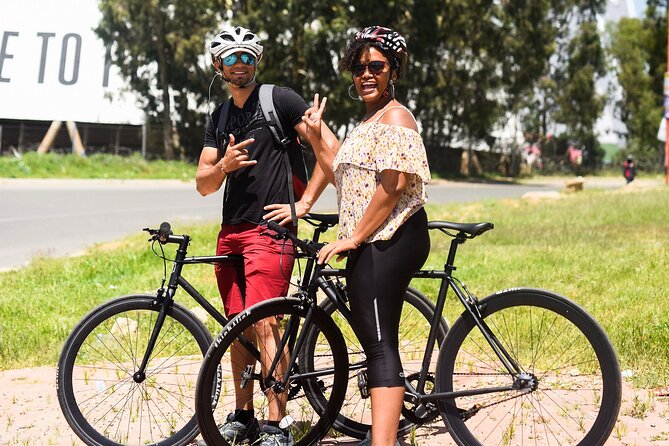
Here’s the honest part. Soweto is hilly. Multiple guides are praised for being careful with group safety, but the terrain is still terrain. If you’re not used to cycling uphill, build that into your expectations.
Reviews mention two different bike setups. Some people loved that the bikes had been upgraded with gears, which makes climbing easier. Others mention single-gear bikes and still found the ride doable, but only if you’re prepared for effort.
My practical advice: before you go, ask what kind of bike gearing you’ll get. If it’s single speed, go in mentally ready to work, and keep your effort steady rather than sprinting at the first steep stretch.
Also, don’t forget comfort basics. Bring sunscreen and a cap, since you’ll spend time outside moving between stops.
Put these Johannesburg options head to head
- From Johannesburg: Pilanesberg Nature Reserve Game Safari
★ 4.8 · 1,327 reviews - Full Day Ultimate Pilanesberg National Park Safari from Johannesburg or Pretoria
★ 4.5 · 718 reviews - Half-Day Tour of Soweto Tour
★ 4.5 · 712 reviews - Soweto: Walking Tour with a Local Guide and Lunch
★ 4.9 · 648 reviews
Stop 1: Phomolong, family stories and how apartheid reached everyone
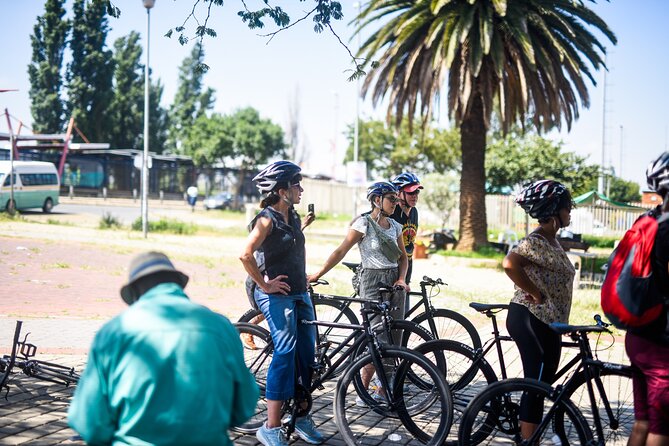
Phomolong is where the tour starts setting emotional context. You spend about 15 minutes here, and the focus is on how apartheid shaped different generations within families, then how Soweto has changed since.
This is a key first stop because it tunes your brain for what comes next. Without this framing, the memorials and historic sites can feel like isolated points. With it, they become part of one continuous social story: repression, resistance, and change across time.
What I like about starting in this kind of place is that it doesn’t rush into big names. It reminds you that oppression was not abstract. It showed up in housing, work, and family life.
Stop 2: Mzimhlophe hostel, domestic workers in the city’s margins
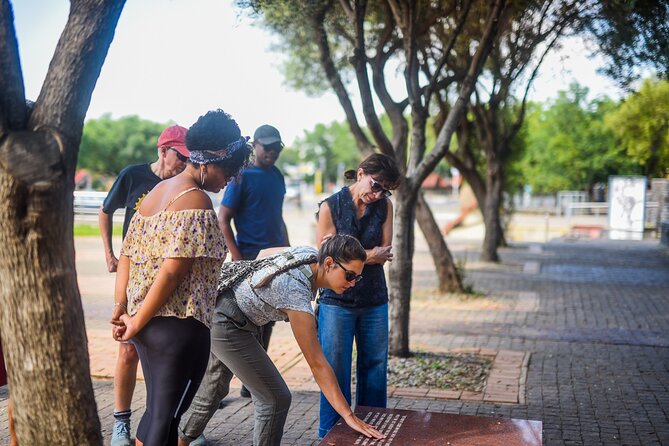
Mzimhlophe takes you to the former women’s residential hostel in Soweto, described as a place where domestic workers lived while working in the Johannesburg suburbs. The visit runs about 30 minutes, and it’s a powerful shift in perspective.
Instead of focusing only on protests, this stop forces you to see the everyday system. Domestic work was shaped by apartheid-era urban design, labor patterns, and forced separation between where people lived and where they worked. You’re not just learning about resistance. You’re seeing the conditions that made resistance necessary.
This stop also helps explain why “freedom” meant more than voting rights. It meant dignity in work, safer living conditions, and the right to live close to one’s life rather than being pushed away.
Stop 3: Nkungu Street and Mama Lillian Mgoyi’s legacy
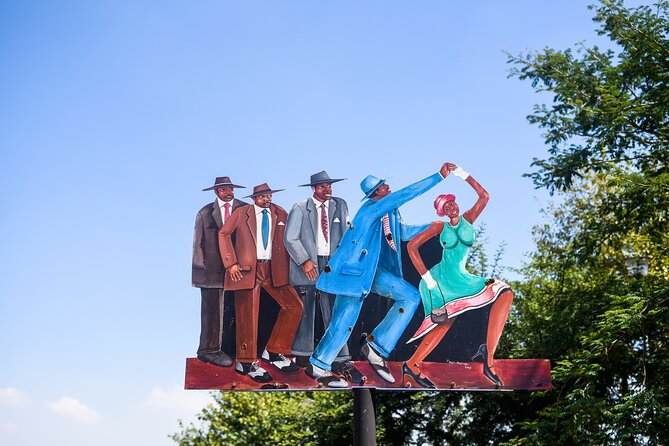
At Nkungu Street, you visit the home area of Mama Lillian Mgoyi, an anti-apartheid activist and President of the Women’s League. This stop lasts around 10 minutes, but it packs real specifics.
You’ll learn about her leadership role in a women’s march of 20,000 women to the Union Buildings in Pretoria. The protest targeted apartheid requirements that women carry passbooks as part of the pass laws.
This is the kind of stop I love because it’s not generic hero worship. The story is tied to a concrete policy, then tied to organized collective action. It also balances the usual “male leaders” version of history by spotlighting women’s organizing.
Hector Pieterson Museum and Memorial: the 1976 youth uprising
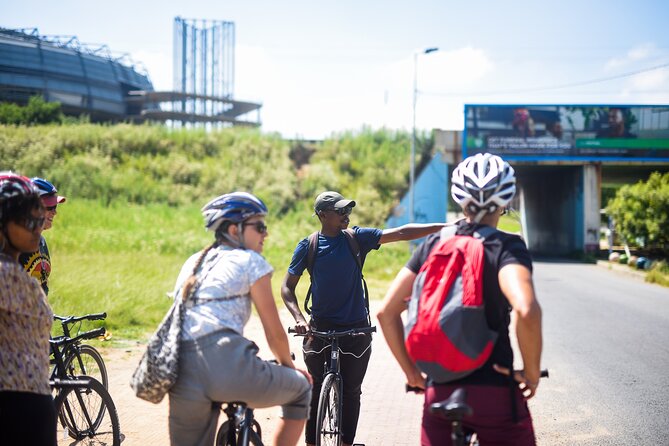
Next up is about 30 minutes at the Hector Pieterson Museum and Memorial, connected to the 1976 youth uprising. This is one of the stops that will likely leave the strongest emotional mark.
What’s useful here is pacing. You’ve already been primed with family impact and women’s resistance before arriving at a memorial tied to youth mobilization. That order helps you understand why young people’s actions mattered. It’s not just a historical date. It’s a response to an environment that had been tightening for decades.
If you tend to get overwhelmed by heavy sites, take your time at this stop. Look, breathe, then move on when you’re ready. Your guide’s job is to keep the ride flowing without turning tragedy into a checklist.
Orlando Stadium and the scale of public life in Soweto
Orlando Stadium is next, about 10 minutes. Even if you’re not a die-hard sports fan, this is a smart stop. It shows how large public spaces become part of a community’s identity.
You’ll hear the stadium’s timeline: originally built in 1959, later demolished and rebuilt from scratch for R280 million, with a listed capacity of 37,139. The description also points out facilities like hospitality suites, conference rooms, a gymnasium, and a 200-seater auditorium.
And you’ll connect it to football culture, including that Orlando Stadium is linked with Orlando Pirates, described as 1995 CAF Champions League winners, and with a nickname tied to its importance.
Why it matters for a history tour: sports and public events often become social spaces where people gather, feel pride, and build a shared sense of future. It’s not only about the past. It’s about how communities sustain energy after hard chapters.
Mandela House and Vilakazi Street: Nobel Peace Prize connections up close
After Orlando Stadium, you visit Mandela House, about 30 minutes. The entrance fee is not included, so plan for that R60 cost if you want to go in.
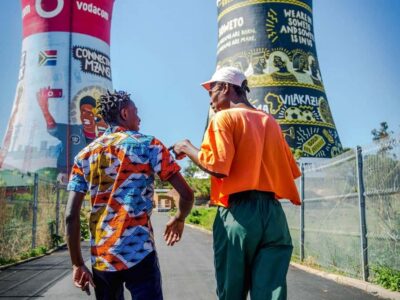
Then comes Vilakazi Street, about 40 minutes. This is a highlight for many people because it’s linked to where Mandela lived, and the street is described as connecting two Nobel Peace Prize winners. The guide uses this area to help you see how people’s lives and reputations shaped global attention while still being rooted in local streets.
My favorite part of a stop like this is the contrast. You can stand in a real neighborhood and feel the closeness between worldwide figures and everyday life. It’s not a distant museum setting. It’s urban space with doors, sidewalks, and lived-in boundaries.
The Orlando Police Department stop: institutions and how power works
The tour also includes a short stop at the Orlando Police Department area, around 10 minutes. The information you’ll hear includes that it was formed in 1875, and that it evolved with the city. You’ll also learn it employs over 800 sworn officers and more than 150 civilian employees.
Is this stop heavy? It can be, because policing is tied to how control is maintained. But it’s also useful because it rounds out the story beyond protests and memorials. You get at least a glimpse of how institutions function in the broader picture of society.
Lunch: the kota sandwich break that keeps the story digestible
Now for the part your legs will thank you for. Lunch is included: a traditional deep-filled kota sandwich from Local Burger (Kota), plus bottled water.
I like how this tour builds lunch in after meaningful stops rather than making it a rushed afterthought. After cycling, hills, and emotionally intense sites, a full meal helps you keep thinking clearly. You’re not just moving from one site to another. You’re getting fuel so the guide’s explanations land better.
A kota is also a practical choice for a half-day format. It’s filling, fast to eat, and easy to keep energy up without slowing the group too much.
Who should book this bike tour in Soweto
You should book if:
- You want a guided way to understand Soweto without doing it on your own.
- You like learning through stops that mix people’s lives with major turning points.
- You want exercise but still need a guided structure.
- You want lunch included, and you’re excited about local food like the kota.
You might want a different option if:
- You struggle with steep climbs and you’re worried your bike may be single speed.
- You want a purely low-effort, flat route.
The “sweet spot” is travelers who can handle a workout and who enjoy history that stays human, not only monumental.
Quick practical tips so your day runs smoothly
- Bring sunscreen and a cap. You’ll be outside moving between stops.
- Wear shoes you can pedal in comfortably. Avoid flimsy sandals.
- If hill climbing worries you, ask about bike gearing ahead of time.
- Plan for extra spending if you want Mandela House. The R60 entrance fee is not included.
- Expect an efficient half-day. It’s about 4 hours, not all day.
Guides like Thabo and Themba are repeatedly praised for being careful and for making the group feel safe and welcome. That matters when you’re riding through active neighborhoods, not a car-free park.
Should you book the Guided Bicycle Tour of Soweto with Lunch?
For most people, yes. This is a strong way to learn Soweto because you get real neighborhoods, meaningful stops, and included fuel in the form of a proper kota lunch. The price feels fair when you consider that bikes, helmet, bottled water, and lunch are all covered.
Book it if you’re ready for hills and want a guided route that connects stories from family life to activism to memorial sites. If you’re very sensitive to climbing or unsure about bike gearing, ask the operator what kind of bike setup you’ll get before you commit.
FAQ
How long is the Soweto guided bicycle tour?
It’s about 4 hours.
Is lunch included?
Yes. Lunch includes a traditional deep-filled kota sandwich and it’s listed as Local Burger (Kota).
What about water?
The tour includes bottled water.
Do I need to pay for Nelson Mandela House?
Yes. The entrance fee for Nelson Mandela House is listed as R60 and is not included.
Are there any other entrance fees I should expect?
Yes. Other items and costs are not included, and some stops note admission is not included.
What’s the starting point?
The meeting point is 7346 Kumalo St, Orlando West, Johannesburg, 1804, South Africa.
How big is the group?
The tour has a maximum of 15 travelers.
Is pickup or drop-off included?
No. Pick-up and drop-off are not included.
Do I need to bring a bike or helmet?
No. A bicycle and helmet are included.
Can I cancel for a full refund?
Yes. You can cancel up to 24 hours in advance for a full refund.
Is the tour suitable for most travelers?
The info says most travelers can participate.
Newest reviews around Johannesburg
- Johannesburg: 3-Day Panorama Tour with Kruger Park Safari★ 5.0 · 7 reviews
- Drakensberg Mountains. Tugela Gorge and Amphitheater Hike★ 5.0 · 7 reviews
- 5-Day Kruger National Park Safari including Breakfast and Dinner★ 4.5 · 7 reviews
- Aerial cableway Hartebeespoort Halfday tour★ 4.5 · 7 reviews
- Soweto Township Tour★ 5.0 · 7 reviews
- Private Safari Tour: Pilansberg National Park Big 5★ 5.0 · 7 reviews
- Historical and Cultural Interactive Experience of Soweto★ 5.0 · 7 reviews
- Soweto Tour★ 5.0 · 7 reviews
Soweto Tours, compared.

Soweto /Johannesburg and Apartheid Museum Guided Full Day Tour
Read our review →Johannesburg Hop-On Hop-Off City Tour with Soweto Option
Read our review →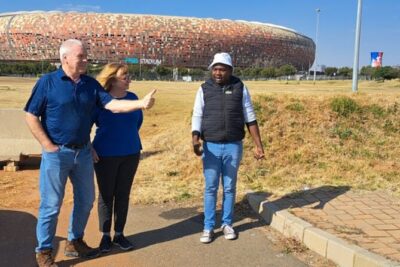
Jo’berg in 1 Day: Soweto, Apartheid Museum & City Tour
Read our review →
Full-Day Tour with Soweto and Apartheid Museum
Read our review →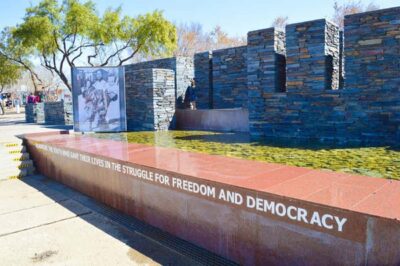
Browse the lists this tour appears in