

Reviewed · SOWETO TOURS
Half Day Johannesurg and Soweto Guided Tour
This tour is interesting because it connects Johannesburg’s segregation-era story to the lived reality of Soweto, all in one tight 5-hour run. You get city views, inner-city change, and then a day-trip focus on the neighborhoods that shaped South Africa’s push toward democracy.
Two things I really like about it: you see both famous landmarks and lesser-known stops that help the bigger story make sense, and the guiding tends to be personal, flexible, and human. If you’re lucky enough to get Nhlanhla, nicknamed Lucky, you’ll likely notice the same strengths people highlight, like good humor, careful driving, and adapting to what you need in the moment.
One possible drawback: it’s a half-day, so you’ll be in the car a lot and some places feel more like a stop-by stop experience than a long, slow visit. Also, not every museum admission is included, and lunch isn’t included, so you’ll want to plan for extra spending.
Key highlights you should care about
- Hotel pickup and an air-conditioned vehicle so you can focus on the route, not logistics
- Constitution Hill included admission at a former prison and fort that now anchors human-rights tours
- Mandela House included guided time for context you can’t easily get from a quick photo stop
- Vilakazi Street on foot near the Mandela House Museum, including time for a Soweto-style meal stop
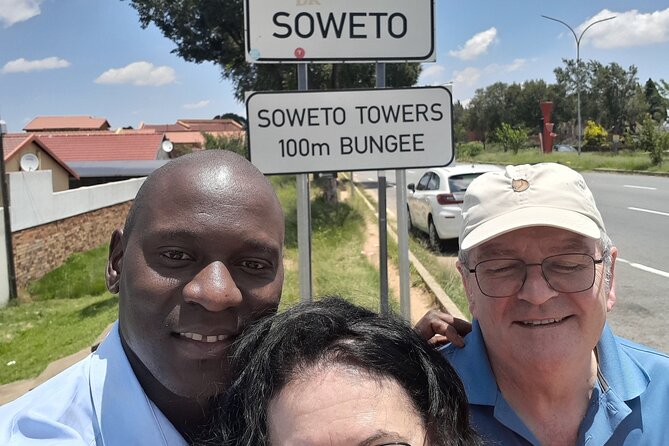
- Soweto viewpoints and landmarks like Diepkloof, the Chris Hani Baragwanath Hospital area, and the cooling towers
Entering Johannesburg through viewpoints and neighborhoods
A half-day in Johannesburg only works if you choose the right mix of places. This route does that by starting with orientation and then building your understanding of how the city formed, expanded, and resisted exclusion.
You begin with hotel pickup, then get a general introduction as you head out. The tour is designed to help you get your bearings fast. Johannesburg is spread out and the neighborhoods can look like different countries depending on where you turn, so the early framing matters. I like that the driver and guide treat context like part of the sightseeing, not an add-on.
You’ll also notice how the route uses short stops well. Most are around 10 to 20 minutes, which keeps momentum but means you should be ready to look, read, and listen without expecting long free time.
More Soweto tours:
- Soweto Half Day Tour
★ 5.0 · 231 reviews - Johannesburg and Soweto tour
★ 5.0 · 231 reviews - Johannesburg Full-Day Tour(Soweto/Jo-Burg & Apartheid Museum)
★ 5.0 · 110 reviews
Johannesburg Stop 1: Orientation, then Houghton Estate’s Mandela link
The early Johannesburg portion starts with a hotel pickup and a quick overview of the area. Then you move to Houghton Estate, one of the more affluent suburbs where Nelson Mandela lived.
This stop is valuable because it challenges one simple idea people have about leaders and places. Mandela wasn’t only a symbol, he had a real address, and this neighborhood connection helps you understand how South Africa’s political story links to ordinary streets, walls, and daily life.
You’ll also pass by a Mandela-related house that’s described as a surprise house you can see during the visit. That kind of detail helps the route feel specific, not generic.
Munro Drive viewpoint: POW-built monument plus big skyline views
Next up is the Munro Drive viewpoint. What makes it more than a quick photo stop is the story attached to it: it’s a national monument built by Italian prisoners of war during the Second World War, and it overlooks Johannesburg’s northern suburbs.
You’re also told you’ll see the world’s largest man-made subtropical forest from here. Even if you don’t have time to explore the forest itself, the viewpoint gives you a mental map for how Johannesburg sits with unusual natural features.
Practical tip: if you’re sensitive to sun or wind, this is one of the stops where you’ll want a hat and quick layers. Views are great, but weather can change fast at higher points.
Hillbrow: why the drive through neighborhoods feels like crossing borders
Hillbrow is one of those Johannesburg areas where you feel the city’s movement. The tour frames it as a place where you can foresee the effects of influx, and the contrast shows as you drive through different neighborhoods.
This is where the “Johannesburg is like the New York of Africa” idea becomes more than a line. The city has attracted people from different places, including across South Africa and across the continent. As the route shifts, you get that quick sense of cultural mix and shifting living conditions.
If you’re trying to understand why Johannesburg is famous for being creative, crowded, and constantly changing, Hillbrow helps you connect that to history.
Put these Pretoria options head to head
- Ultimate Johannesburg Tour
★ 5.0 · 200 reviews - Johannesburg: Pretoria and Cullinan Diamond Mine Tour
★ 4.7 · 165 reviews - Taste of Africa Food tasting Experience
★ 4.5 · 138 reviews - Harties Cableway Experience Ticket
★ 4.5 · 119 reviews
Constitution Hill Human Rights Precinct: a former prison turned living museum
Constitution Hill is the centerpiece for many people, and for good reason. It’s a human-rights precinct now, built around a former prison and military fort, and it connects jailed leaders and national transformation into one place.
You get about 1 hour here, with admission included. That time window is long enough to take in major exhibits and still keep the day moving.
This stop is especially meaningful because the tour specifically connects the site to key political figures who were once incarcerated there, including Nelson Mandela, Mahatma Gandhi, and Winnie Madikizela-Mandela. You don’t just hear names. You see why the country’s democratic progress is linked to confinement, court history, and struggle.
If you prefer hands-on learning, this is the stop to slow down mentally. Read the panels, look at the spaces described, and let the guide’s explanations land before you jump back into the bus.
Nelson Mandela Bridge and the Johannesburg CBD: orientation plus gold-rush relics
After Constitution Hill, you’ll drive on the Nelson Mandela Bridge, which is described as a relatively new addition to the skyline that has already become iconic. From there, the route points you toward Johannesburg’s New Town direction.
Then the tour shifts to early mining history and the Johannesburg CBD. You’ll learn how the gold-rush era shaped the city in the late 1800s, and you’ll see relic-style reminders along the way, like mining headgear, stamp mills, and old carts.
This part helps you understand a tough truth: Johannesburg’s growth came with exclusion, forced labor, and unequal access to land and opportunity. The tour doesn’t only show monuments. It gives you the reason Johannesburg looks the way it does.
Standard Bank Ferreira Mine Stope: the hidden mine entrance story
One of my favorite “wait, what is that?” stops on the route is the Standard Bank Ferreira Mine Stope. It’s in the basement of the Standard Bank headquarters downtown, where a long-forgotten mine entrance was discovered during construction of the building. The site is preserved like a small museum.
Even with a 20-minute timeframe, this stop can be a strong memory-maker. You’re seeing how the city built on layers, literally and figuratively. Underground history can feel abstract in books, but a preserved entrance makes it immediate.
Maboneng Precinct: inner-city change you can walk through in pieces
Next is Maboneng Precinct, described as a newly rejuvenated area that used to be abandoned. The tour includes time to see the mix of restaurants, coffee shops, clothing boutiques, art galleries, and retail plus studio spaces.
This isn’t denial of the past. It’s proof that Johannesburg is still in motion. Change here is not a marketing slogan, it’s visible in street-level activity and building reuse.
Just be aware of what this stop is and isn’t. It’s not a long neighborhood walk. It’s a guided orientation through a slice of what’s been revived.
The giant football stadium pass: a modern marker in the same city
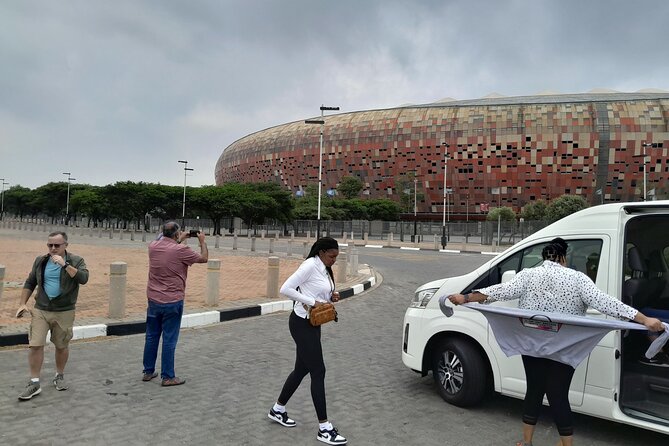
You’ll also drive past an iconic landmark described as the largest football stadium in Africa, tied to the 2010 FIFA World Cup opening ceremony and matches.
It’s a quick pass, but it’s a useful contrast point. You’re moving through places tied to imprisonment and struggle, and then you see a large modern sports symbol. The message is simple: Johannesburg contains both heavy history and large contemporary culture.
Diepkloof Park in Soweto: seeing class differences inside Soweto
Once the tour shifts to Soweto, it starts with Diepkloof Park. The route divides the area into sections and specifically highlights Diepkloof Extension as an upmarket part of Soweto with professionals living there, plus more formal owner-built large houses.
This stop matters because it prevents one-dimensional thinking. Soweto is not one single type of neighborhood. It has varied housing styles and social patterns, including differences in household income and home values.
The tour frames Diepkloof as having higher-than-average house prices compared to other suburbs of Soweto, which gives you a more accurate picture of the area’s internal diversity.
Chris Hani Baragwanath Hospital: why health care scale changes how you see a neighborhood
Then you drive by the Chris Hani Baragwanath public hospital. You’re given strong details here, including that it’s considered the third largest hospital in the world, spread across about 173 acres, with around 3200 beds and thousands of staff.
Even if you do not enter the hospital, seeing the scale from the road changes how you interpret the area. When a neighborhood holds a facility of that size, it affects traffic, employment, and everyday life.
This stop also reinforces a theme the day returns to again and again, community institutions are huge. They are not side notes.
The cooling towers stop: industry past plus entertainment present
The tour also points out the cooling towers as a prominent landmark. It’s now used as an entertainment center, including a famous bungee jump and a barbecue restaurant.
I like this stop because it’s not just history and not just entertainment either. It shows how structures tied to past industry can be repurposed, creating a new kind of local gathering point.
If you’re planning photos, this is one where you’ll want to stand in a spot that won’t block others. The time here is short, and you’ll have one clean chance.
Vilakazi Street and Sakhumzi Restaurant: the heart of Soweto
The day’s Soweto centerpiece is Vilakazi Street, often described as one of the most well-known streets in South Africa. You’re told it’s the street where Nelson Mandela and Archbishop Emeritus Desmond Tutu both lived, and that gives the street a special gravity.
But the tour also brings it back to present-day life. The emphasis is on the electricity that comes from people calling the street home now, each with their own stories.
You’ll stop at Sakhumzi Restaurant near the Mandela House Museum for about 40 minutes. The tour frames Sakhumzi as popular for a Soweto-style buffet featuring traditional dishes like umngqusho (samp and beans) and mogodu (tripe).
Important note for your plans: lunch is listed as not included. So treat this as your window to eat if you want, not a guarantee you’ll be fed as part of the price. If you have food allergies or strong dislikes, check the buffet offerings carefully when you arrive.
Mandela’s House Museum: guided time at a key heritage site
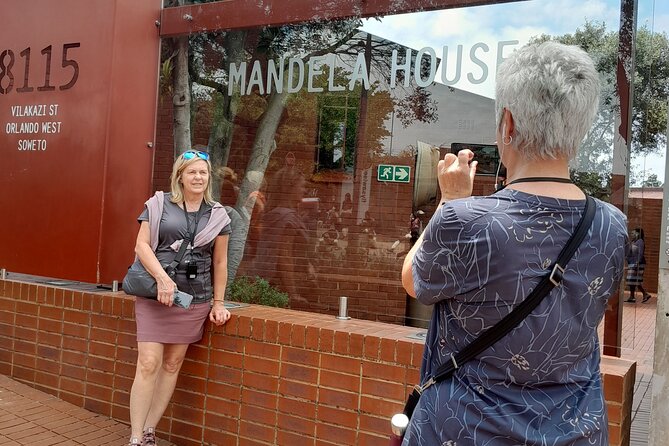
Next is Mandela’s House, where you get a guided tour and included admission. You’ll spend about 20 minutes in this portion.
This stop is crucial because a guided format helps you see what matters in the exhibits and artifacts. It’s not only about a birthplace myth. The museum experience focuses on what the house represents, using sound, film, interpretive panels, and guided explanations to tell the story.
If you’re doing only a half day, this is the stop that tends to anchor the entire trip. You leave Soweto with names and places you can place in your head.
Hector Pieterson Museum and Memorial: self-guided, so set your pace
After Mandela’s House, you visit the Hector Pieterson Museum and Memorial for about 30 minutes. The museum is described as self-guided, focused on the 1976 Soweto student uprising, and named after a 13-year-old victim.
Admission is not included for this one. So if you want it, plan for the extra entry cost. Also, because the visit is self-guided, your experience depends more on what you choose to read. Give yourself enough focus here.
This museum is a symbol of resistance against apartheid, and you can feel that message in the way the material is presented.
Getting back to Johannesburg: wrap-up and what you keep thinking about
After your Soweto day portion, you’ll head back to the starting point or your accommodation in Johannesburg. The total day is designed around a smooth handoff, with about 30 minutes at the end.
When I think about why this tour works for first-timers, it’s because it ends with context you can carry. You don’t just see landmarks. You learn a chain of meaning, from neighborhoods and institutions to political history and personal legacy.
Price and value: what $85.06 buys in 5 hours
At $85.06 per person, the price is fairly competitive for a guided half-day that includes hotel pickup, an air-conditioned vehicle, and English-speaking guidance. It’s also positioned as a private tour, meaning you’re not sharing the day with a random crowd.
Value-wise, I’d look closely at what’s included:
- Constitution Hill admission is included
- Mandela House admission is included
- Bottled water is included
- The vehicle and transport are included via private transportation
What’s not included is also important:
- Lunch
- Personal purchases
- Hector Pieterson Museum admission is not included
So the real cost picture depends on your choices. If you plan to eat at Sakhumzi and you want to enter Hector Pieterson too, you should budget extra. If you’re comfortable with that, the base tour price feels like it pays for guidance, time management, and key included exhibits.
What to expect from the guide, and why it matters
The route succeeds or fails based on the guide. Here, the most praised pattern is clear: people talk about guides like Nhlanhla (Lucky) as friendly, attentive to needs, flexible about timing, and strong on history with a sense of humor.
That last part matters more than it sounds. Johannesburg history can be heavy. A guide who can keep the day moving, answer questions without rushing, and adjust when you need a break turns the tour from a checklist into an actual learning experience.
Even if you don’t get Lucky specifically, look for a guide who drives safely, speaks English well, and explains why each stop sits where it does.
Who this tour fits best
This is a smart choice if:
- You have only half a day and want a guided Johannesburg plus Soweto overview
- You want the key sites tied to democracy and resistance, especially Constitution Hill and Mandela’s House
- You prefer a private, calmer format with hotel pickup rather than hopping between buses
It may not be the best fit if:
- You want long free time inside museums and neighborhoods
- You don’t want any additional entry fees beyond what’s included
- You strongly prefer a meal included in the price, since lunch is not included
Should you book this Johannesburg and Soweto half-day tour?
Yes, if you want a tight, well-structured introduction that doesn’t skip the major meaning behind the places. The included stops give you two anchors, Constitution Hill and Mandela’s House, and the route adds enough Johannesburg neighborhood contrast to help you understand the setting.
If you’re the type who likes to read, ask questions, and take notes in photos, this format will feel satisfying. If you’re more of a wander-at-will traveler who hates time limits, you might feel rushed by the short stop durations.
FAQ
How long is the Johannesburg and Soweto guided tour?
The tour lasts about 5 hours.
What is the price per person?
The price is $85.06 per person.
Is hotel pickup included?
Yes, pickup is offered, and the tour includes private transportation.
Which admissions are included and which are not?
Admission for Constitution Hill Human Rights Precinct and Mandela’s House is included. Hector Pieterson Museum and Memorial admission is not included.
Is lunch included in the tour price?
No, lunch is not included.
What is the cancellation policy?
You can cancel for a full refund up to 24 hours in advance of the experience’s start time. If you cancel less than 24 hours before, the amount paid is not refunded.
Newest reviews around Pretoria
- History Bicycle Tour of Soweto★ 4.0 · 7 reviews
- Johannesburg,Soweto and Apartheid Museum full-day tour★ 5.0 · 7 reviews
- Bicycle or Tuk Tuk Soweto Guided Experience★ 5.0 · 7 reviews
- Soweto and Apartheid Museum Tour★ 4.5 · 7 reviews
- Full Day Johannesburg , Apartheid Museum and Soweto Tour – 8hrs★ 4.5 · 7 reviews
- 3 Day Victoria Falls Tour From Johannesburg★ 5.0 · 7 reviews
- Lesedi Cultural Village Tour★ 5.0 · 7 reviews
- Soweto & Apartheid Museum Combo Tour★ 5.0 · 7 reviews
Soweto Tours, compared.
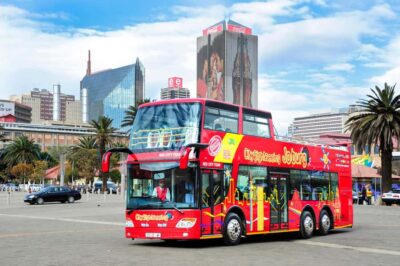

Soweto /Johannesburg and Apartheid Museum Guided Full Day Tour
Read our review →Johannesburg Hop-On Hop-Off City Tour with Soweto Option
Read our review →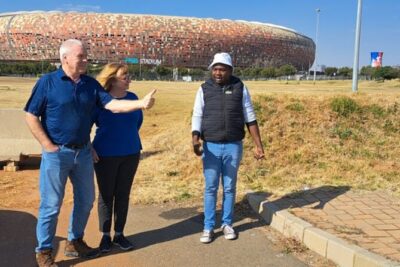

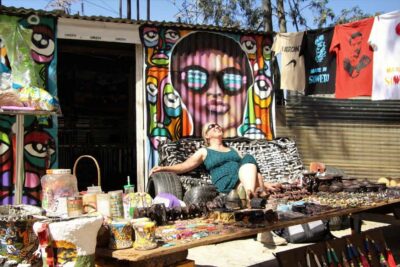
Jo’berg in 1 Day: Soweto, Apartheid Museum & City Tour
Read our review →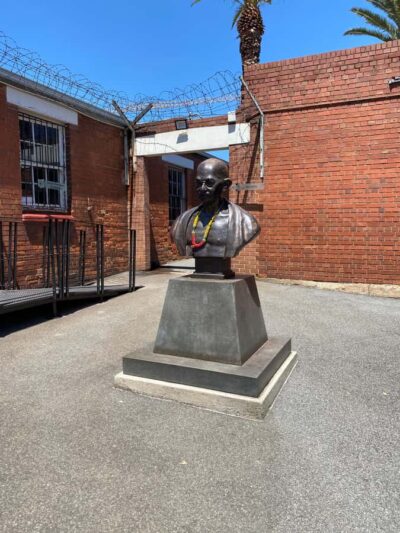
Full-Day Tour with Soweto and Apartheid Museum
Read our review →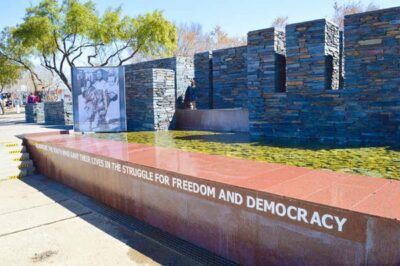
Browse the lists this tour appears in