
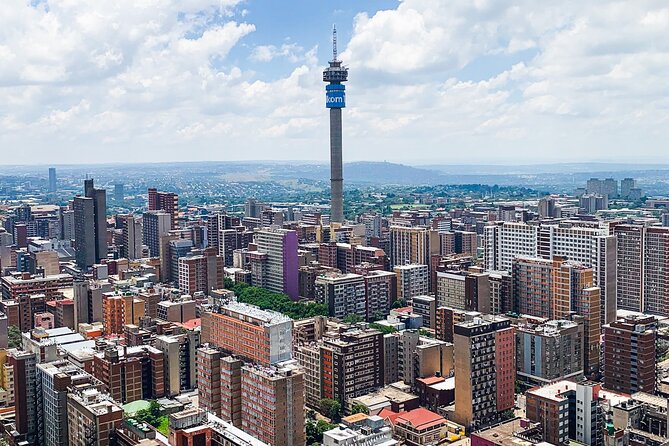
Reviewed · WALKING TOURS
Johannesburg: City Centre Walking Tour
This Johannesburg City Centre walking tour is interesting because it strings together the city’s past and present in a tight loop, from gold-rush streets to Mandela landmarks and today’s creative neighborhoods. What I like most is the Mandela Bridge photo stop built into the route, and the way the walk explains how everyday buildings connect to politics, work, and migration. One thing to weigh is that it is a proper walking route and the tour is flagged as not suitable for some visitors, including wheelchair users.
You’ll cover a lot of ground for a half-day experience, so plan on comfortable shoes and a steady pace. Also, the Workers Museum stop can depend on opening hours on the day you go, so bring flexibility and let your guide handle the pacing if a venue is closed.
Key things you’ll notice on this walk

- Gold mining roots in the street layout, from early digging areas through central CBD landmarks
- Mandela and Oliver Tambo’s law-firm story tied to a real address you can see
- Workers Museum themes that connect Johannesburg to migrant labor history
- Market Theatre and street art culture in Newtown, where history and creativity overlap
- Mandela Bridge views that make the whole route feel connected
- Braamfontein energy at the finish, with a natural place to eat after the walk
Walking Johannesburg’s CBD like a story map, not a checklist
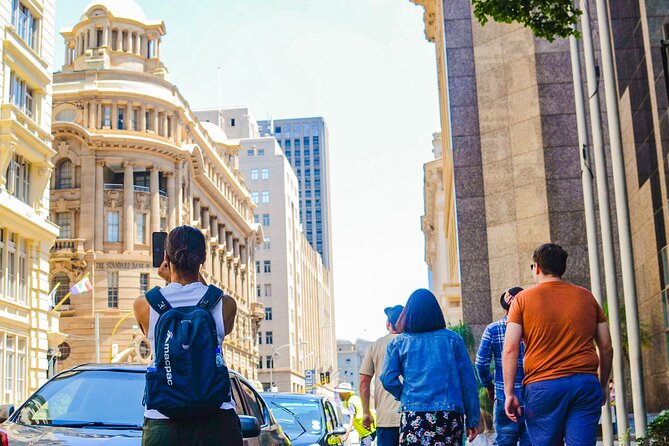
Johannesburg gets a bad rap when people only talk about risk or traffic. This tour is built to show you the other side: the city centre as a place with layers, meaning, and real street life. You start in the formal urban core, then gradually work toward areas where culture and youth energy shape the vibe. It is a practical route for learning what the city was, what it became, and why that matters now.
I also like that the tour does not treat landmarks like museum props. You’re told what to look at on the facades and in the street patterns, and you get the current-city context as you go. That combination helps the architecture make sense, instead of feeling like you’re just ticking boxes. A lot of people come away saying the city feels more understandable after walking it with a guide.
More Walking Tours in Johannesburg
- Soweto: Walking Tour with a Local Guide and Lunch
★ 4.9 · 648 reviews - Soweto Walking Tour with Lunch
★ 5.0 · 288 reviews - Johannesburg: Local Food Tasting Guided Walking Tour
★ 4.7 · 192 reviews
A quick reality check before you commit
At $40 per person for a 3-hour guided walk, you are paying for time with a local who can connect the dots. That can be excellent value if you want context, not just photos. If you only want a casual stroll with no history layer, you might feel it is more structured than you need.
Gandhi Square and the Carlton Centre, start strong with big-city sightlines
The tour meets outside Nando’s at Gandhi Square, near the Metropolitan Building area. This is a smart meeting point because it is easy to find, and it puts you right in the centre of things. You’ll begin with orientation, then head into the CBD’s key civic and commercial zone.
Carlton Centre stop: the skyline layer
One of the early highlights is the Carlton Centre, where you get a guided visit for about 20 minutes. Even if you have seen tall buildings before, in Johannesburg the skyline is tied to economic ambition and downtown’s shifting fortunes. The guide helps you read the place beyond height, which is what makes a quick stop feel worthwhile.
You’ll also get a sense of why the CBD can feel intense. The streets hold layers of business, government, and long-term change. That sets you up for the political and historical themes that show up again and again later.
Something different for the Johannesburg list:
- From Johannesburg: Pilanesberg Nature Reserve Game Safari
★ 4.8 · 1,327 reviews - Johannesburg: Hop-On Hop-Off Bus with Optional Soweto Tour
★ 4.6 · 985 reviews - Soweto /Johannesburg and Apartheid Museum Guided Full Day Tour
★ 5.0 · 932 reviews - Johannesburg Hop-On Hop-Off City Tour with Soweto Option
★ 4.5 · 768 reviews
Photo stops at key legal and civic buildings
As you continue, you’ll include stops such as the High Court of South Africa, Gauteng Local Division, where you have a photo moment plus a short guided explanation. Then you move through Marshalltown, with quick guided visits that help you understand what the buildings were built to represent.
The vibe here is not leisurely sightseeing. It is paced learning. If you like getting your bearings fast, this opening section is a good match.
Marshalltown and Johannestown streets, where the city’s early footprint shows
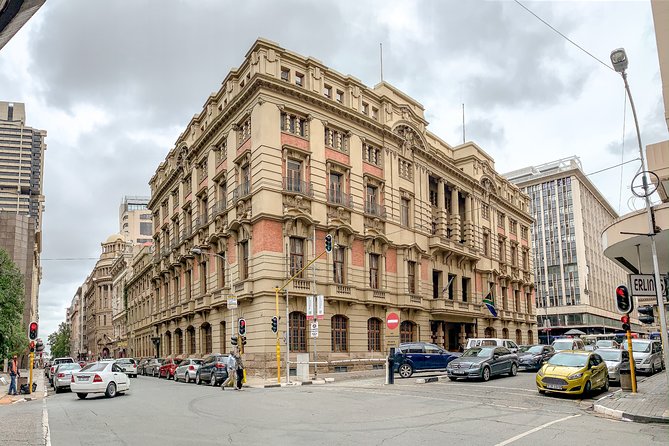
After the legal and civic zone, the route keeps rolling through Marshalltown and Johannestown. There are short walks between stops, and you’ll get photo moments in spots that help you understand the CBD’s structure.
Marshalltown Post Office and the built environment
You’ll stop at the Marshalltown Post Office for a shorter guided visit. Post offices can sound boring on paper, but in a growing gold-rush city they become symbols of connectivity: communication, logistics, and administration. The guide’s explanation matters here because it links the building to Johannesburg’s practical growth, not just its design.
Johannestown and Beyers Naude Square
Next comes a photo stop area around Marshalltown, Johannestown, followed by Beyers Naude Square. This part of the walk is especially useful for first-time visitors, because you start noticing how the city’s centres are organized around key intersections and public spaces.
Even in a short timeframe, this section helps you understand what people mean when they talk about Johannesburg as a city of change. You are not just seeing streets, you’re seeing how the city got shaped.
Anglo American corporate stop, and why it’s part of the story
The tour also includes a photo stop and guided look at the Anglo American corporate office area. This is where Johannesburg’s mining story comes back into focus, but in a modern corporate setting. It is a reminder that the gold era did not vanish, it transformed into modern power and business structures.
Ferreirasdorp and Chancellor House, the Mandela law-firm connection you can stand beside
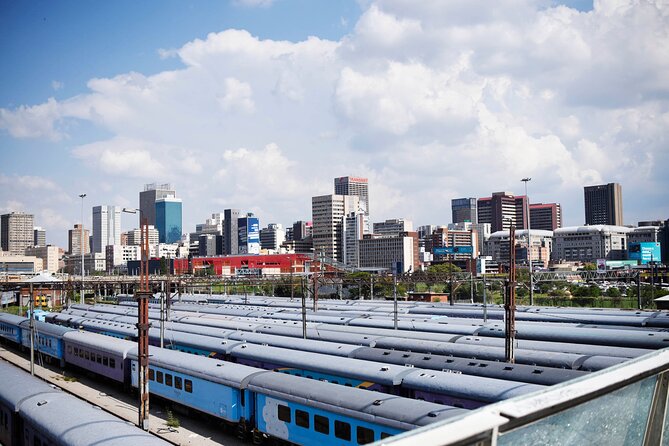
One of the most meaningful segments is the walk toward Ferreirasdorp, often described as the cradle of Johannesburg. The guide explains this as the area tied to the earliest gold digging and where early diggers first settled.
Ferreirasdorp: seeing the gold-rush starting point in context
This is the part of the tour where the city stops being abstract. You get the street-level backdrop for why Johannesburg grew so fast and why it attracted people from far beyond the local area. If you want a Johannesburg that feels grounded in real events, this is where the tour earns its keep.
Chancellor House: Mandela and Oliver Tambo’s first black-owned law firm
The walk then includes Chancellor House, connected with Nelson Mandela and Oliver Tambo establishing their first black-owned law firm. This stop is powerful because it connects two things you might otherwise separate: political struggle and professional organization. It is not only about protest. It is also about building institutions that could fight injustice through law.
If you like historical sites with an address and a clear story, you’ll appreciate this segment.
Newtown: Workers Museum, Mary Fitzgerald Square, and Market Theatre culture
After the Mandela and mining connection, the tour shifts gears into Newtown, a creative neighborhood with art, performance, and public culture. This is also where the tour’s “past meets present” theme gets more human and less abstract.
Workers Museum and the migrant labor perspective
The Workers Museum stop is designed to explain Johannesburg’s migrant labour history. That topic helps you understand why Johannesburg became what it is, because migration shaped the workforce, communities, and the city’s daily rhythm.
One practical note from real experiences: the Workers Museum can be closed on certain days, and when that happened, guides still made sure the story landed. So even if you cannot get inside, you should still come away with context, not just a closed-door photo.
Mary Fitzgerald Square: a quick pause with meaning
Next you’ll have a stop at Mary Fitzgerald Square for photos and guided sightseeing. Squares like this are often where the city’s public life becomes visible, and the guide uses them to connect the ideas you heard earlier to the spaces where people gather now.
Market Theatre: street art, galleries, and cultural spaces
The tour includes a guided stop at the Market Theatre, with time for a photo and a short guided look. This theatre area is tied to the city’s cultural energy, including street art and nearby galleries and cultural spaces.
The reason this works on a walking tour is that you do not just hear about culture. You see where people create and perform. That makes the transition to the bridge and the final stop feel natural, not random.
Mandela Bridge viewpoints: the big photo moment with city-wide context
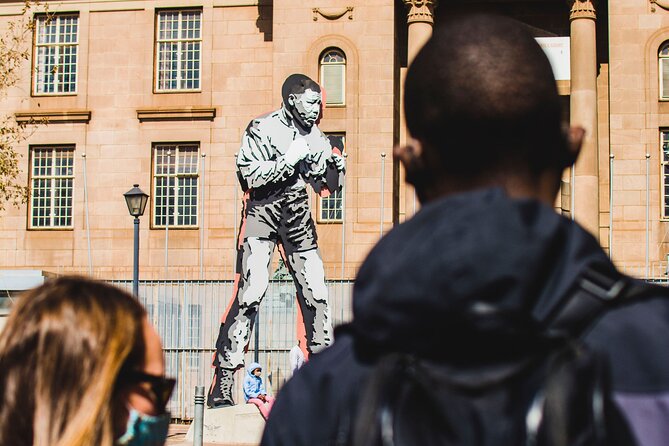
The route ends with an iconic payoff: the Nelson Mandela Bridge. You’ll walk over with a guided scenic route and get stunning views and a perfect photo opportunity.
This stop is more than a postcard. The guide’s commentary helps you understand why the bridge matters as a connector between different parts of Johannesburg, and why crossing from one neighborhood story to another can be as symbolic as it is physical.
If you like photos, this is where you should slow down. The views are the payoff for all the street reading you’ve been doing earlier.
Braamfontein finish and Sha’p Braai, a practical place to reset
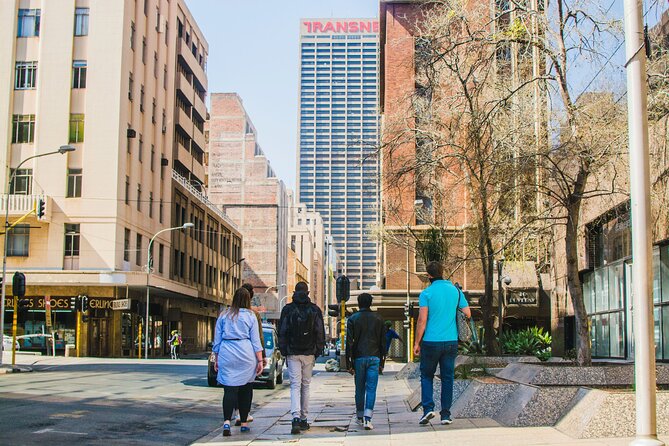
The tour concludes around Braamfontein, described as a new artistic hub with youthful energy. This finish works because you end in a part of the city that feels like it belongs to today, not only to yesterday.
You’ll finish at Sha’p Braai – Shisanyama, which is an easy place to eat after three hours on your feet. Lunch is not included on the tour, so this is one of the best times to grab food nearby and keep the conversation going.
If you want one low-effort plan, do the tour first, then use your appetite to explore Braamfontein at your own pace.
Price and value: why $40 can make sense here
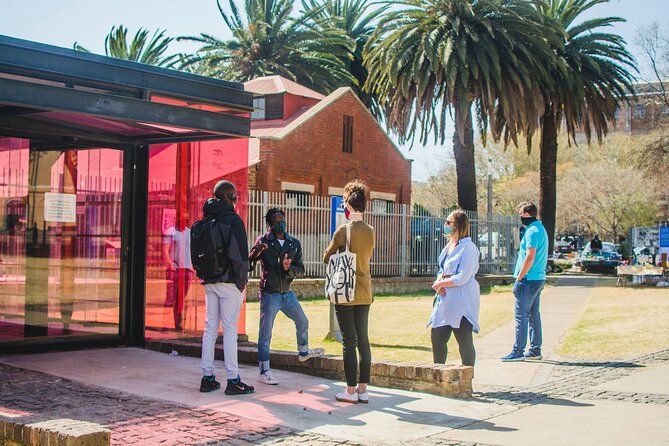
At $40 per person for 3 hours, this tour is not trying to be a cheap pass-through. You are paying for guided context, entrance fees, and bottled water.
What makes it good value is that the route is built around high-impact stops:
- architecture you can actually see up close
- political and legal landmarks tied to specific people
- museum and culture stops that explain why the city developed the way it did
- a viewpoint finish that turns learning into something visual
If you are visiting Johannesburg for the first time and you want one outing that gives you orientation, this is a strong candidate. If you already know the history well and you just want casual sightseeing, you might choose something looser instead.
The pace and practical comfort
This is a walking tour with multiple photo stops and short guided visits. Bring water-friendly basics, and plan for a steady pace. Comfortable shoes are the real requirement. The tour is welcoming to all ages in general, but it is flagged as not suitable for pregnant women and wheelchair users even though the activity also lists wheelchair accessibility. If mobility is a concern, I’d treat the not-suitable note as the important one and double-check before booking.
The guides make it: what you’ll likely experience with Refiloe, Thabo, and others
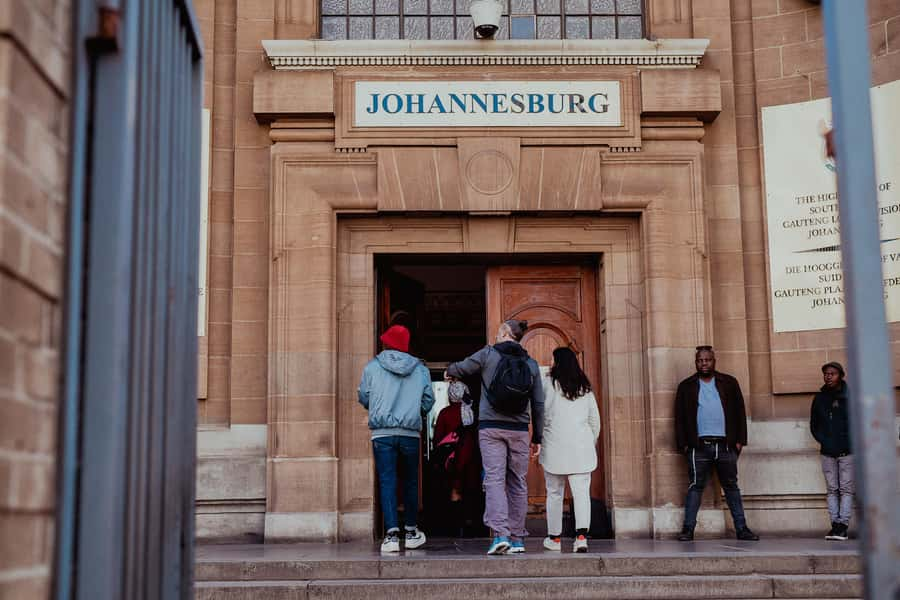
In the reviews, the standout pattern is guide quality. People repeatedly describe guides as funny, friendly, and able to explain South African history in a way that sticks. You’ll also hear the idea that guides pace the route to your questions and keep things safe and focused.
Names that come up often include Refiloe, who is praised for being genuinely down to earth, going out of his way to make sure you see everything, and giving people space to ask questions. Thabo is mentioned for an entertaining style and for being generous with time when the tour ran longer than the scheduled window. Other guides like Mulalo, Mathapelo, and Clement also show up with the same theme: the walk feels guided, not rushed.
There’s also a safety-related theme. Several reviewers say they felt safe and taken care of during the CBD walking route, and that the guide knew exactly where to go.
That is what you should look for in a city like Johannesburg. A good guide does not only know the facts, they also know how to move you through the city comfortably.
Should you book it? My take for the right visitor
Book this tour if you want:
- a structured way to understand Johannesburg CBD in one outing
- Mandela-related landmarks tied to real addresses
- context for mining, apartheid-era history, and migrant labor
- culture stops in Newtown, ending with a great viewpoint at Mandela Bridge
- a guide who can answer questions and keep the walk moving at a human pace
Skip it or rethink it if:
- you need a low-walking or fully step-free route, because it is flagged as not suitable for wheelchair users and also not suitable for pregnant women
- you do not want history explanation and would rather do self-paced sightseeing
If you are on a short stay and you want one experience that turns downtown from intimidating into understandable, this is one of the most efficient ways to do it.
FAQ
Where is the meeting point for the Johannesburg City Centre Walking Tour?
You meet your guide outside Nando’s Restaurant at Gandhi Square, near the Metropolitan Building area.
How long is the tour?
The duration is 3 hours.
How much does the tour cost?
The price is $40 per person.
What is included in the price?
The tour includes entrance fees, bottled water, a guide, and the walking tour.
What is not included?
Hotel pickup and drop-off and lunch are not included.
Is the tour guided in English?
Yes, the live tour guide is listed as English.
Where does the tour finish?
The tour finishes in the area of Braamfontein, at Sha’p Braai – Shisanyama.
Can I take photos during the tour?
Yes. The schedule includes multiple photo stop moments, including at places like the High Court area, Market Theatre, and Nelson Mandela Bridge.
Does the tour include tickets or ticket lines?
The activity lists skip the ticket line, so you should not expect long waits for tickets as part of the tour.
Is the tour suitable for wheelchair users or pregnant women?
The tour is listed as not suitable for pregnant women and wheelchair users, even though it also says wheelchair accessible. If you are in either category, it is best to confirm details before booking.
What happens if the Workers Museum is not open on the day I visit?
The tour includes a Workers Museum stop, but reviews show that it may not be open on some days. In those cases, your guide may still explain the migrant labor themes as part of the walking experience.
Newest reviews around Johannesburg
- Johannesburg: 3-Day Panorama Tour with Kruger Park Safari★ 5.0 · 7 reviews
- Drakensberg Mountains. Tugela Gorge and Amphitheater Hike★ 5.0 · 7 reviews
- 5-Day Kruger National Park Safari including Breakfast and Dinner★ 4.5 · 7 reviews
- Aerial cableway Hartebeespoort Halfday tour★ 4.5 · 7 reviews
- Soweto Township Tour★ 5.0 · 7 reviews
- Private Safari Tour: Pilansberg National Park Big 5★ 5.0 · 7 reviews
- Historical and Cultural Interactive Experience of Soweto★ 5.0 · 7 reviews
- Soweto Tour★ 5.0 · 7 reviews
Walking Tours, compared.
Browse the lists this tour appears in