
If you want a close-up, conservation-minded look at cheetahs and African wild dogs, this Ann Van Dyk Cheetah Centre tour makes an easy half-day add-on from Johannesburg or Pretoria. I love the hotel pickup and drop-off, so you can skip car logistics, and I love the way the guide connects what you see on-site to the center’s conservation goals.
One thing to plan around: the visit is short, about 3 hours, and the experience varies by day. Weekend tours are your best bet for a cheetah run, while weekday visits focus more on cheetah time in the enclosure.
Key things to know before you go
- Pickup from Pretoria or Johannesburg means no rental car stress and less time spent on the road.
- Small group size (max 15) keeps the guided portion feeling personal, not rushed.
- Weekend cheetah run option for speed, while weekdays lean toward enclosure interaction.
- More than cheetahs: you’ll also see African wild dogs and other rescued species in breeding and support programs.
- Guides who explain behavior: expect clear talk on biology, behavior, and the conservation status of cheetahs.
- Entrance fees and activities are included, so you can budget for the tour and your own food.
Half-day value with real pickup from Pretoria or Johannesburg
This tour is built for people who want a wildlife hit without turning the whole day into driving and searching. You get round-trip transportation, bottled water, and a guided visit to the Ann Van Dyk Cheetah Centre. For many visitors, it also becomes a smooth “first day in Africa” kind of plan, because it’s structured, focused, and easy to slot in.
The drive can take time depending on where you start, but the payoff is that you arrive ready to learn, not still figuring out directions. Some guide teams are praised for managing Johannesburg traffic well, using backroads to keep you on schedule. That matters, because once you’re at the center, you want your energy for the animals, not the clock.
Put these Johannesburg options head to head
- From Johannesburg: Pilanesberg Nature Reserve Game Safari
★ 4.8 · 1,327 reviews - Johannesburg: Hop-On Hop-Off Bus with Optional Soweto Tour
★ 4.6 · 985 reviews - Soweto /Johannesburg and Apartheid Museum Guided Full Day Tour
★ 5.0 · 932 reviews
Entering the Ann Van Dyk Cheetah Centre: what your guided tour actually covers
The main stop is a guided walk through the center’s programs, with the cheetah breeding work at the heart of it. The center’s foundation story traces back to cheetah breeding beginning in 1971, and the place is still actively involved in supporting the cheetah’s survival through controlled breeding and reintroduction efforts. The guide will explain how this conservation work ties back to genetics, breeding success, and long-term survival.
While cheetahs are the star, you won’t just be looking at one species. You’ll also hear about programs that support other animals whose continued existence depends on careful management and human support. The setting is outdoors and you’re surrounded by the natural scenery under the Magaliesberg Mountains, which helps the visit feel more like a wildlife facility in nature than a boxed-in city attraction.
Cheetahs in action: cheetah run on weekends, enclosure time on weekdays
Timing is the big difference-maker for what you’ll see. If your schedule allows a weekend visit, you may be able to witness a cheetah run, and that’s the moment many people came for. Watching a cheetah move at speed is a reminder of how built-for-velocity they are, not just how beautiful they look.
Weekdays shift the emphasis. Instead of a run, you’ll get cheetah interaction in the animals’ spacious enclosure. That can still be very memorable, especially if you enjoy close observation and behavior. In practical terms, this is also helpful if you want calmer pacing and a more “watch and learn” visit rather than waiting for an activity window.
Beyond cheetahs: African wild dogs, breeding programs, and other animal ambassadors
One of the most useful things about this tour is that it doesn’t treat the cheetah as the only story worth telling. The center also supports the African wild dog through breeding and rewilding projects. If you’re a wild dog fan, this is one of the best ways to see them up close, because they’re not common on typical South African itineraries unless you specifically plan for it.
You’ll also see additional species that live on-site as part of ongoing support programs. Depending on availability, this can include brown hyena, caracal, serval, African wild cat, vultures, meer-kats, ostriches, and a range of antelope and wildebeest. Seeing a mix like this can feel like a tour inside a larger conservation mission, not a one-animal stop.
Something different for the Johannesburg list:
- Johannesburg Hop-On Hop-Off City Tour with Soweto Option
★ 4.5 · 768 reviews - Full Day Ultimate Pilanesberg National Park Safari from Johannesburg or Pretoria
★ 4.5 · 718 reviews - Half-Day Tour of Soweto Tour
★ 4.5 · 712 reviews - Soweto: Walking Tour with a Local Guide and Lunch
★ 4.9 · 648 reviews
The “zoo question”: why the non-cheetah animals are still part of the conservation story
Some wildlife travelers worry about facilities that keep animals close to humans, and that concern is reasonable. One critique you’ll find is that the other species can feel more like a zoo than a wild safari.
Here’s the practical reality in how the center explains its purpose: many of the non-cheetah animals are rescued and can’t be released back into the wild successfully. That includes animals injured or badly treated by people. The argument is that keeping them at the center is not a random holding pattern, it’s a safe haven because survival outside isn’t realistic.
So how should you decide? If you want animals in complete freedom, you’ll probably prefer a big game reserve day. If you want to understand conservation work step by step, including rescue and long-term care, this tour makes more sense. It’s not pretending to be a wilderness safari, and the conservation focus helps justify why you’re seeing multiple species in a controlled setting.
Who you’ll meet: guides, driving teams, and the feel of a small-group safari
With a maximum of 15 travelers, this doesn’t turn into a crowded factory tour. The guide talk tends to be clear and personal, and you get time to ask questions about what you’re seeing. People often highlight the guide approach, praising professionals who can explain behavior and biology in a way that feels engaging rather than like a lecture.
Guide names that have shown up in visitor accounts include Francois as well as teams like Nichole and Wilson. The details that stand out are the balance of professionalism and timing, plus the way the guides manage feeding moments respectfully. One account describes how watching Wilson feed animals gave a real sense of control and safety around powerful predators. Another mentions a naturalist-style perspective, with extra context that helps you read animal behavior instead of just taking photos.
Also, you’ll be in good hands during the ride. One visit was described as almost like a private safari, with the driving team and a guide working together as a unit. Even if your group is not private, the structure still keeps the experience feeling organized.
The itinerary rhythm: from pickup to guided programs, then back to your hotel
The experience is built around one core block: the guided center tour. You’ll start with hotel pickup in either Johannesburg or Pretoria, ride out to the center with bottled water provided, and then spend the bulk of your time with the guide at the facility.
Inside, the flow centers on the conservation programs, with cheetahs and wild dogs discussed as key parts of the work. As you move through the spaces, you should expect explanations of biology and behavior and how that connects to conservation status. The group stays together, so you don’t have to “wander and hope” for what’s next.
Then you head back to your accommodation. The whole thing is about 3 hours total, so it’s more of a focused half-day than a long outing. If you plan dinner right after, you’ll likely feel like the timing worked out rather than leaving you exhausted.
Price and logistics: is $225.67 worth the ride?
At $225.67 per person for an approximately 3-hour outing, it’s not a throwaway activity. The honest value question is: are you getting enough included to justify the cost?
In this case, a lot of the usual nickel-and-dime items are already handled. You get round-trip transportation, entrance fees, all activities, and bottled water included. That means you’re not separately paying for entry, local guides, or basic hydration. The guide component is also a major value driver, because good interpretation is the difference between seeing animals and understanding conservation.
That said, this isn’t cheap compared to basic day trips where you only pay for entry. It can feel steep if you’re someone who only wants a classic open-vehicle safari experience. But if you care about cheetah conservation, love the idea of seeing wild dogs up close, and appreciate a guided explanation, the price starts to look more reasonable. With only up to 15 travelers, you also avoid the “big bus” feel that can lower perceived value on short tours.
If you’re coming from the airport area or building a multi-stop day, choosing pickup location matters. Pretoria is often closer to several wildlife-focused attractions than driving from Johannesburg, and that can help you spend more of your time on-site rather than in traffic.
What to wear and bring for a comfortable cheetah centre visit
I can’t guess the exact weather, but I can give you smart defaults for South Africa wildlife outings. Wear comfortable shoes you don’t mind getting a little dusty. Dress in layers, because morning and afternoon temperatures can swing, especially with time spent outdoors near natural terrain.
Bring your phone or camera gear, but also keep your expectations realistic. This is a guided conservation visit, not a full-day reserve drive, so the photography time is structured around what the guide is showing. That means you’ll want to pay attention first, then shoot, so you capture the moments you actually understand.
Don’t plan on lunch being included. Food and drinks aren’t part of the package, so have a plan for what you’ll eat before or after. You do get bottled water, which helps, but it’s not a full meal solution.
Who should book this cheetah and wild dog tour
This tour fits best if you:
- Want a short, guided wildlife experience with pickup sorted
- Love cheetahs and specifically want a day that can include a cheetah run on weekends
- Are interested in wild dogs and other rescued species supported through breeding and rewilding projects
- Appreciate conservation context, biology, and behavior explanations from the guide
It might not fit if you:
- Only want open-wildlife roaming in a large reserve all day
- Expect a free-form safari with long vehicle tracking time
- Need a day with included meals, since lunch is not included
There’s also a child practical note. Minimum age is 7, children must be accompanied by an adult, and there’s a minimum height of 1.2 meters. If you’re traveling with kids, this matters for planning and comfort.
Should you book? My quick decision guide
Book it if you want a clean, efficient way to see cheetahs and African wild dogs up close with guided conservation interpretation, and if you can work around day-of-week differences for cheetah speed. The inclusion of pickup, fees, and bottled water makes the logistics simpler than many “DIY day” options.
Skip it or swap it for a longer reserve safari if you’re chasing the feeling of hours of vehicle tracking and wide open wilderness. Also, if $225.67 feels like a lot, you’ll get the best satisfaction by treating this as a focused education and conservation visit, not as a replacement for a full game reserve day.
FAQ
How long is the Ann Van Dyk Cheetah Centre tour?
The tour runs for about 3 hours.
Do I need to rent a car, or is pickup included?
Pickup and drop-off are included from hotels in Johannesburg or Pretoria, so you do not need to rent a car for this experience.
What is included in the tour price?
The price includes bottled water, all activities, hotel/port pickup and drop-off, and all fees and taxes.
Is lunch included?
No. Lunch and other food and drinks are not included.
Can I see a cheetah run?
You can witness a cheetah run on weekend visits. Weekday visits include a cheetah interaction in the animals’ spacious enclosure.
Are there age or height requirements?
Yes. Children must be accompanied by an adult, the minimum age is 7 years, and there is a minimum height restriction of 1.2 meters.
Newest reviews around Johannesburg
- Johannesburg: 3-Day Panorama Tour with Kruger Park Safari★ 5.0 · 7 reviews
- Drakensberg Mountains. Tugela Gorge and Amphitheater Hike★ 5.0 · 7 reviews
- 5-Day Kruger National Park Safari including Breakfast and Dinner★ 4.5 · 7 reviews
- Aerial cableway Hartebeespoort Halfday tour★ 4.5 · 7 reviews
- Soweto Township Tour★ 5.0 · 7 reviews
- Private Safari Tour: Pilansberg National Park Big 5★ 5.0 · 7 reviews
- Historical and Cultural Interactive Experience of Soweto★ 5.0 · 7 reviews
- Soweto Tour★ 5.0 · 7 reviews
Johannesburg Tours, compared.
Soweto /Johannesburg and Apartheid Museum Guided Full Day Tour
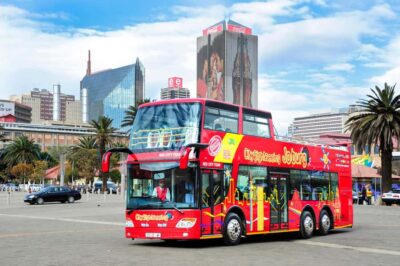
Read our review →Johannesburg Hop-On Hop-Off City Tour with Soweto Option
Read our review →
Full Day Ultimate Pilanesberg National Park Safari from Johannesburg or Pretoria
Read our review →
Jo’berg in 1 Day: Soweto, Apartheid Museum & City Tour
Read our review →Browse the lists this tour appears in