
Reviewed · LUNCH EXPERIENCES
Full-Day Swartberg Mountain PRIVATE Tour (including lunch and transfers)
If you want a day in the wild Western Cape without feeling rushed, this private Swartberg Mountains outing is a strong choice. You’ll ride up into big Karoo country, hit the UNESCO-listed Swartberg Pass, then get out on foot to look for wildlife and native plants.
What I like most is how the day mixes big views with real, hands-on noticing. I love the Swartberg Pass story, from its 1888 construction to the drive up to high altitude. I also love the way the hikes set you up to spot creatures like klipspringer and eagles, plus plants such as protea and local fynbos.
One consideration: this kind of outing is weather-dependent, and you’ll be walking more than just stretching your legs. If it’s really rough out, you may feel it in the day, even if the operator plans smart alternatives.
Key points at a glance
- UNESCO Swartberg Pass (opened in 1888), including the pass-by-car views and a history-rich stop
- 300 million-year-old sandstone formations you’ll see up close on foot
- Wildlife spotting focus for Verreaux’s eagles, buzzards, jackals, and klipspringer
- Conservation learning at the H.O.P.E. Foundation offices, then another relaxed walk
- Private vehicle and driver-guide, plus lunch, entrance fees, and transfers handled for you
- A schedule built for morning light, with a start time of 9:00 am
Why the Swartberg Mountains feel different from typical South Africa day trips
The Swartberg range is one of those places where the scenery keeps changing every few minutes. You start in the foothills, climb toward a high pass, then move through countryside where geology and wildlife both seem to be on your schedule. It’s not just a drive for photos. The day is built around seeing the place, not just passing through it.
Also, you get a very practical kind of “nature education.” You’re not left alone with a map and hope. You have a driver-guide who helps you read what’s around you, from birds in the sky to plant shapes on the ground. That matters in Karoo terrain, where the details are easy to miss if you do not know what to look for.
The best part is that the route gives you variety without chaos. You’ll hit the UNESCO road, take at least one hike tied to old rock formations, then add a second lighter walk after a conservation stop. It’s the sort of rhythm that keeps you interested, even when clouds roll in.
Put these Western Cape options head to head
- Cape Point and Boulder’s Penguins Full Day Tour
★ 5.0 · 3,118 reviews - From Cape Town: Cape Point & Boulders Beach Full-Day Tour
★ 4.8 · 3,032 reviews - Cape of Good Hope & Boulder Penguins Full-Day Tour from Cape Town
★ 5.0 · 2,347 reviews
The morning climb from Oudtshoorn toward Swartberg Pass
Your day starts with a morning pickup from your Oudtshoorn accommodation. The exact pickup time is flexible, so you’ll want to confirm your departure time with the operator, rather than assuming it will be perfectly rigid. The tour runs about 7 to 8 hours total, and it starts at 9:00 am.
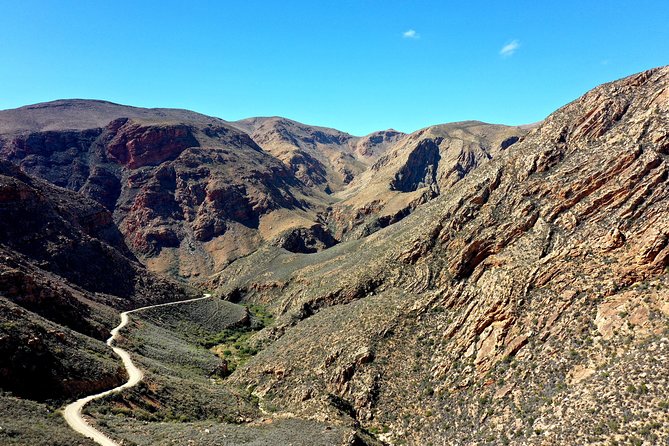
From there, you head north out of town into the foothills of the Swartberg Mountains. The route is set up for a steady ascent, including a climb of roughly 2,900 feet (880 meters) up to Swartberg Pass. Translation: you’ll feel the altitude and the temperature shifts as you go, and your senses tune in fast. In Karoo country, even a modest change in elevation can make a big visual difference.
A private vehicle makes this smoother. You’re not negotiating bus stops or waiting while someone decides whether they want to stand up or stay seated. You’ll also have the advantage of not wasting time once you reach key points.
If you are sensitive to long drives, plan for the fact that this is a “ride plus stops plus walks” day. It’s not a sprint. You’ll likely settle into the pace once you start moving through the pass area.
Swartberg Pass, UNESCO since 1888, and the engineering you can still see
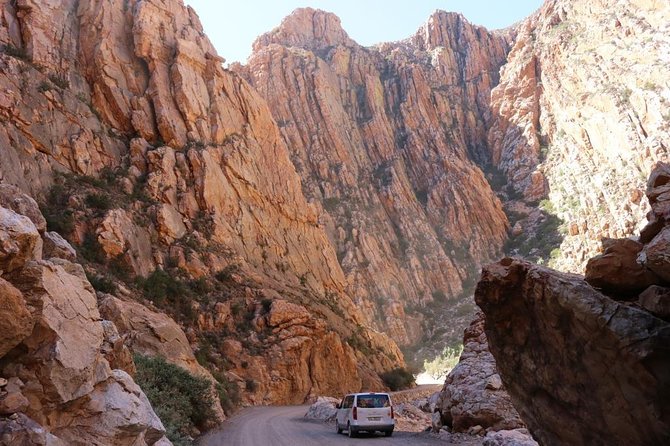
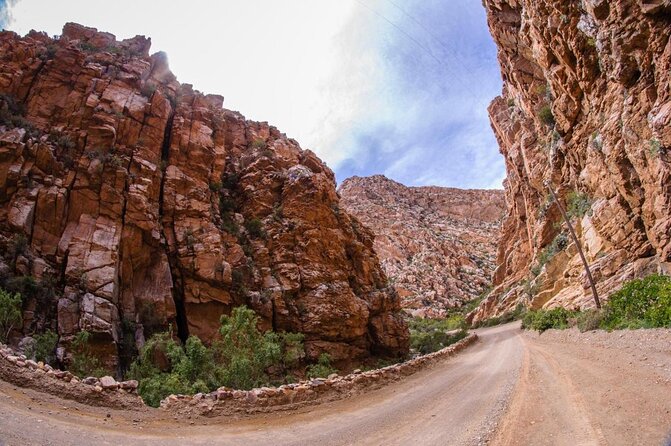
Swartberg Pass is the headline. It’s part of a UNESCO-listed region, and it’s famous for being a high mountain road with serious age behind it. The pass was built by road engineer Thomas Bain, using a dry-stone technique that required a lot of manual labor. It opened on 10 January 1888, and the structure is still there in gravel-surface form today.
Why I think this stop works: when you look at the pass up close, you understand that the road is not random. It was engineered to solve a real terrain problem, and the techniques used back then still make sense now. Standing at a viewpoint linked to this road, you can actually connect the dots between geology, slope, and the way humans forced a path through.
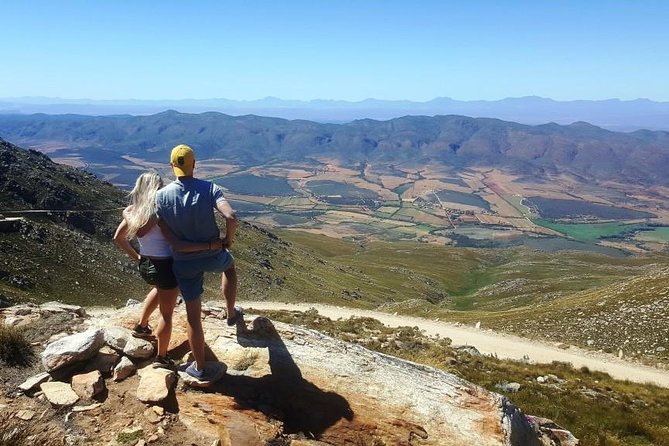
From the pass, you’ll get views down toward the Klein Karoo and the Great Karoo. That’s more than pretty scenery. It’s the kind of vista that helps you understand why animals use these corridors and why plants grow where they do.
One practical tip: keep your phone camera ready, but also look with your eyes first. The scenery is layered. You’ll often find you take fewer photos because you actually notice more.
The hike where 300 million-year-old sandstone becomes real
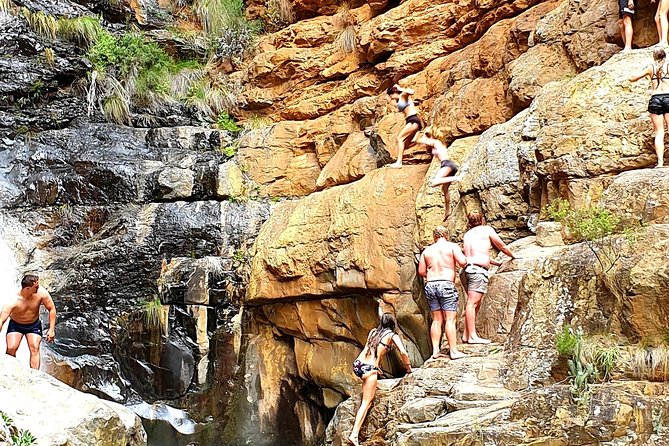
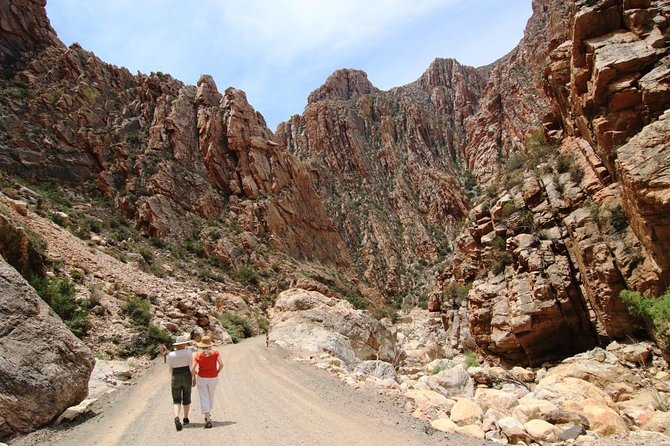
After the pass drive and your time at the top, you leave from Swartberg Pass on foot for a hike into the surrounding countryside. This is where the day turns from “viewing” into “doing,” and it is tied to a very specific geologic story: the area’s sandstone formations are about 300 million years old.
Even if you are not a geology person, the rocks are readable in person. You can see how the land has been shaped and why the terrain looks the way it does. It’s the difference between reading about age and standing beside rock that has been there long enough to outlast countless worlds.
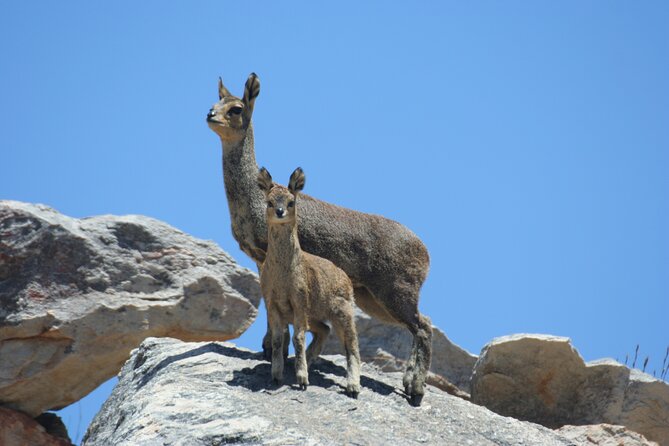
This hike is also a wildlife and plant scouting chance. As you walk, keep your eyes peeled for Verreaux’s eagles and other birds such as buzzards. You may also see jackals and klipspringer, the mountain antelope that often looks like it belongs on a cliff edge.
Plants are part of the program too. If you look closely, you can spot protea species, which provide nectar for local sunbirds. You can also watch for fynbos types like the pincushion plant and cone bush.
How to get the most value from this part: move at the guide pace, and slow down when something catches your attention. Wildlife in this region can be more about timing than luck. If you’re constantly scanning at speed, you’ll miss the quiet wins.
Something different for the Western Cape list:
- Bloukrans Bungy, the worlds best bungy jump!
★ 5.0 · 504 reviews - Skip the Line: Highgate Ostrich Farm Tour Ticket
★ 4.5 · 110 reviews - Touw River Boat Cruise – Wilderness National Park
★ 4.5 · 72 reviews - Marine Big 5 Safari: Self-Drive
★ 4.5 · 68 reviews
Seeing wildlife the smart way: what to watch for on the ground and in the sky
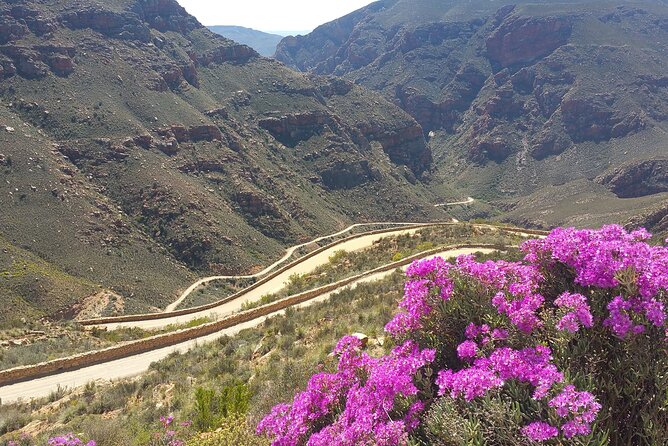
The Swartberg is not one of those places where every minute guarantees a big animal in front of you. The point is to give you more chances through smart looking. Your guide helps you focus on the right cues.
For wildlife, there are two main zones to keep checking:
- Above you, for birds. Verreaux’s eagles and buzzards can show up as silhouettes or circling shapes before you ever see clear detail.
- On the slopes and edges, for animals like klipspringer and jackals. These often blend into the terrain, so you’ll do better when you scan slowly and check angles.
Then there are the plants, which are your “ground-level map.” When you notice protea or fynbos species, you start understanding the ecosystem. That helps with bird spotting too, since nectar plants and perching areas go together.
The strongest feedback from real outings is that the driver-guide makes this spotting easier. For example, one guide named Lynette has been praised for pointing out wildlife and plants people would have missed, and for connecting it back to the pass and South Africa beyond just facts. That kind of guiding turns the day from random walking into a guided nature lesson.
H.O.P.E. Foundation: conservation that connects people, animals, and land
One of the most meaningful stops is at the H.O.P.E. Foundation offices. This is where you learn about conservation efforts tied to the area and the people working to protect the ecosystem.
Why this matters, even if you came for the views: conservation is not an abstract idea here. In a region shaped by harsh conditions and specific species, protecting habitat is what keeps the wildlife in the story. The more you understand the mission, the more you notice the land like it has purpose, not just scenery.
You’ll spend time learning about the efforts designed by the group’s members. It’s not just a lecture. It sets context for why you’re hiking, why wildlife matters, and why local knowledge is essential.
Then you head out again for a second leisurely hike to explore additional plant and animal life around the area. This sequence, learn first then walk, makes it easier to connect what you just heard to what you’re about to see.
The second hike: calmer pace, more plant details, better odds to notice
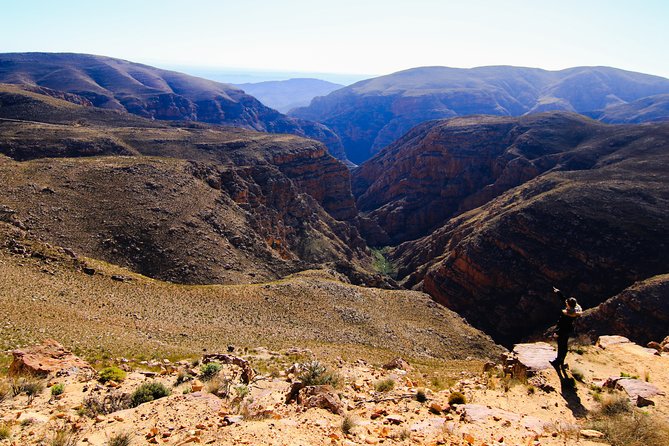
After H.O.P.E., you get a second walk, described as more leisurely. That’s a good setup for most people because your legs are already warm and you’re not starting from scratch.
This second stretch is about extending your understanding. If the first hike got you thinking in terms of geology and big wildlife scanning, the second hike tends to let you sharpen focus on plants and smaller clues. You’ll likely keep seeing protea and fynbos types, and you can also look for how animal activity shapes what grows where.
This is also where your guide’s spotting skill pays off. When the pace is slower, the tiniest details start to matter, like the way birds react to movement or how certain plants cluster.
If you’re trying to maximize your chances of seeing something special, it’s a good time to stay observant and keep your eyes up and down, not just one or the other.
Lunch, timing, and how the day flows in real life
Lunch is included, along with private vehicle transport, the driver-guide, and nature reserve entrance fees. That’s a major value point because you’re not budgeting time or money for a separate meal stop while you’re already in the middle of a hike-and-views day.
Start-to-finish, expect a morning run into the mountains, a key UNESCO pass highlight, hikes with wildlife and plants, a conservation office stop, then another walk before a drop-off back at your Oudtshoorn accommodation.
One practical tip for comfort: wear shoes you trust on uneven ground, and bring layers. High altitude and open landscapes can change quickly, and it’s easier to adjust when you’re not stuck in one temp for hours.
Also, plan for the fact that the tour requires good weather. That doesn’t mean you will only go on perfect blue-sky days. It means the operator may reschedule if conditions are too poor for the planned experience.
Private tour value: what you pay for and who it suits best
At $201.77 per person for a 7 to 8 hour private tour, you’re paying for three big things: time, access, and guidance.
Time: you avoid the headache of renting a car, figuring out where to stop, and then managing the hikes on your own. The pickup and transfers mean the day stays smooth.
Access: nature reserve entrance fees are included, and the tour is built around specific stops that make sense as a full day loop.
Guidance: this is the part that most directly improves the outcome. Wildlife and plants are easier to spot when someone points out what matters and tells you how the ecosystem works. The praise for guides like Lynette centers on exactly that: spotting what you would miss and explaining why it’s important, including the story behind the pass.
Who it fits:
- Nature lovers and outdoor-minded people
- Anyone who wants a wildlife-and-plants focused day rather than just driving
- Visitors staying in Oudtshoorn who want a full day without planning stress
- People who like learning context, not just taking photos
Who might feel it’s not ideal:
- If you hate walking or want minimal time on foot, this may feel like too much activity.
- If your schedule is tight and weather is uncertain, you’ll need to be flexible since the experience is weather dependent.
One more note: it’s a private activity, so only your group participates. That helps families and friend groups keep the day moving at a pace that fits them.
Should you book the Swartberg Mountain Private Tour?
I’d book this if your idea of a great day is mountains, birds, and getting out of the car to see what the land looks like up close. The combination of Swartberg Pass, a hike tied to 300 million-year-old sandstone, and a conservation stop at H.O.P.E. Foundation makes the day feel connected, not random.
I’d also book it if you want better spotting odds. A good driver-guide can turn the day into something richer, especially for wildlife and plants that are easy to overlook.
Skip it if you’re looking for a mostly seated sightseeing day, or if you know you cannot handle weather-driven changes. Otherwise, this private format plus lunch and transfers is a solid value, because you’re paying to have the whole loop handled for you, while still getting real time in the outdoors.
FAQ
What time does the tour start?
The tour start time is listed as 9:00 am, with your exact morning pickup time confirmed after booking.
How long is the Swartberg Mountain private tour?
It runs about 7 to 8 hours.
Does the tour include pickup and drop-off?
Yes. Pickup is offered from your Oudtshoorn accommodations, and you’ll be dropped back there at the end.
What’s included in the price?
Included items are private vehicle transport, a driver-guide, lunch, nature reserve entrance fees, and admission ticket coverage.
What wildlife and plants might I see during the hikes?
You can keep an eye out for Verreaux’s eagles, buzzards, jackals, and klipspringer, plus plants such as protea and fynbos types like pincushion plant and cone bush.
Is lunch included?
Yes, lunch is included as part of the day.
What happens if the weather is bad?
This experience requires good weather. If it’s canceled due to poor weather, you’ll be offered a different date or a full refund.
Is cancellation free?
Yes, there is free cancellation. You can cancel up to 24 hours in advance for a full refund.
Newest reviews around Western Cape
- Klein Karoo “High 5” Stargazing Experience in Oudtshoorn★ 5.0 · 7 reviews
- Quad Bike Fun Ride in Oudtshoorn Western Cape★ 5.0 · 7 reviews
- Half-Day Swartberg Pass PRIVATE Tour (including lunch & transfer – Oudtshoorn)★ 4.5 · 9 reviews
- Bush Safari★ 5.0 · 16 reviews
- 3 Day – Guided Private Wine Walk Trails and Fossil Hunt★ 5.0 · 21 reviews
- Ceres: Ziplining in the Mountains★ 4.9 · 24 reviews
- SHARK CAGE DIVING and VIEWING (Self Drive)★ 4.5 · 25 reviews
- Quad Biking Fun Ride in Wilderness Garden Route★ 5.0 · 26 reviews
Lunch Experiences, compared.

Wine Tour to Stellenbosch & Franschhoek with Tastings & Lunch
Read our review →


Full-Day Soweto, Apartheid Museum and Lunch Tour
Read our review →
Full-Day All Inclusive Safari with Traditional Braai Lunch
Read our review →

Stellenbosch & Franschhoek 20 Wine Tasting + Lunch Shared Tour
Read our review →Browse the lists this tour appears in