
Reviewed · APARTHEID HISTORY TOURS
Johannesburg Historical, Apartheid Museum & Soweto
Johannesburg can feel overwhelming at first. This private, time-efficient day focuses on the city’s key landmarks and threads apartheid history through the day, from Constitution Hill to Soweto. I like that you use a private air-conditioned vehicle, so you lose less time to transit, and I like how the route connects past and present in one sweep.
One thing to keep in mind: the day is built to “cover a lot,” so some stops are brief, and the Apartheid Museum admission is not included. That means you may want to plan a little extra time and money for museum entry so the afternoon doesn’t feel rushed.
Also, you will likely feel cared for by the guide. In particular, Lesiba comes across as professional, well connected around Johannesburg, and good at keeping the day running smoothly, including coordinating pickup details and being flexible about what you want to prioritize.
Key takeaways before you go
- Private transport, fewer hassles: an air-conditioned vehicle keeps the day moving.
- Constitution Hill, prisons to constitutional democracy: a powerful “dark past to bright future” site.
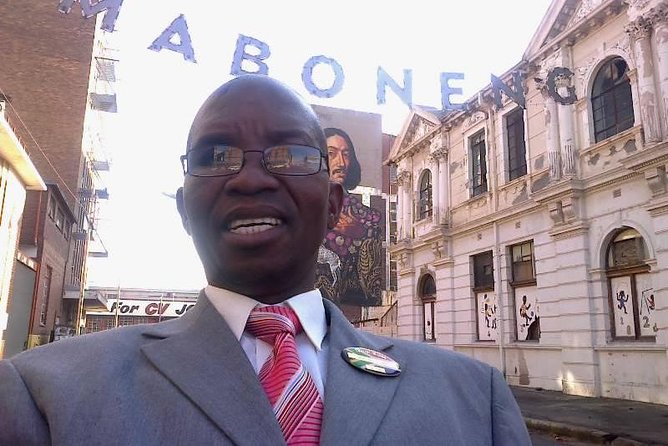
- Maboneng’s place of light approach: a look at how inner-city spaces can change.
- Soweto’s core stops: Vilakazi Street, Mandela House, and the Hector Pieterson Memorial area.
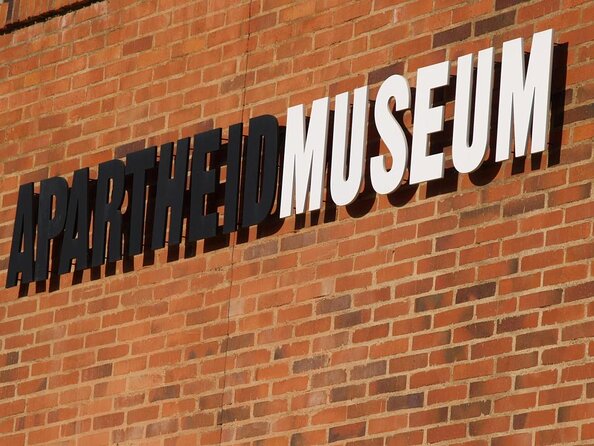
- Apartheid Museum needs planning: you’ll handle that admission on your own.
- Guides like Lesiba add context: strong neighborhood insight and smooth coordination.
A smart way to see Johannesburg in one focused day
If you only have a short window in Johannesburg, this kind of tour makes sense. Instead of bouncing around town on your own, you get a structured route with quick orientation stops, plus longer time where it counts. You end up with a day that’s part history lesson, part city walk-through, and part “see where you are” geography.
The private format matters here. Johannesburg is big, neighborhoods change fast, and timing can get tricky. Using a private vehicle helps you spend your energy on the sights, not on figuring out routes and juggling schedules.
The route also has a logical flow. It starts with sites that frame South Africa’s political story and Johannesburg’s early mining era, then moves into the city’s redevelopment side (Maboneng and Mandela Square), and finally turns toward Soweto for the landmarks tied to Nelson Mandela’s life and the memory of June 16.
More Historical Tours in Johannesburg
- Soweto Township Cultural Tour incl Apartheid Museum and Nelson Mandela House
★ 5.0 · 30 reviews - Cradle of Humankind World Heritage Site
★ 5.0 · 15 reviews - Johannesburg: Soweto History Tour with Hotel Pickup
★ 4.8 · 14 reviews
The preserved mine stope story: the gold rush under today’s streets
Before the museum-heavy parts of the day, you may visit a preserved entrance to an old mine stope. The story is unusually specific: when Standard Bank was preparing foundations for its new headquarters in the 1980s, builders uncovered an underground structure from the city’s earliest gold-mining days.
What I like about this stop is how it adds a layer most sightseeing trips skip. Johannesburg is often explained as an apartheid story first, but it is also a gold-rush city built on hard labor and rapid growth. Seeing a preserved underground feature helps you connect the dots between the city’s origins and the inequality that later shaped its political system.
This stope is named for Ignatius Phillip Ferreira, a farmer, soldier, and prospector who left Grahamstown in the Eastern Cape in 1886 to join the Gauteng gold rush. You’re also told he founded one of the area’s early mining camps in July 1886 and struck gold just three months later. It’s a quick but memorable reminder that Johannesburg’s history starts long before the 20th century.
Constitution Hill Human Rights Precinct: prisons beside the Constitutional Court
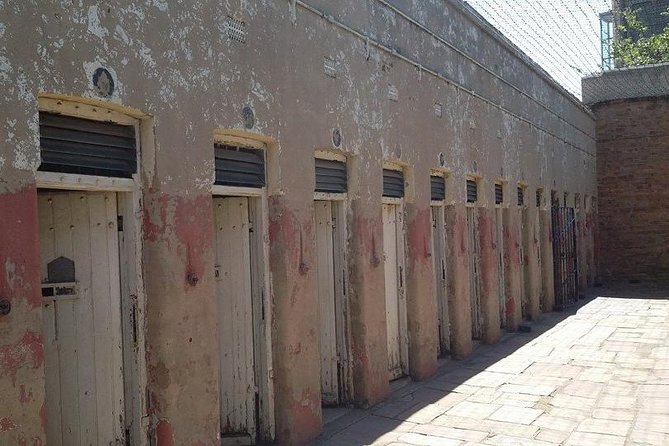
Constitution Hill is the kind of place that makes you slow down. On one ridge you get the symbolism of South Africa’s turn from oppression toward constitutional democracy: Johannesburg’s notorious historic prisons (now museums) sit next to the home of the Constitutional Court.
Plan for about 1 hour 30 minutes here, since the site is more than one building. You are not just looking at artifacts. You’re walking through a political landscape that was built for punishment, then repurposed as memory and education.
A key detail that helps you understand the geography: Constitution Hill sits on a ridge between Hillbrow and Braamfontein, overlooking central Johannesburg. That vantage matters because it reinforces the idea that power was concentrated, watched, and controlled.
If you want a single “anchor” stop for understanding the entire day, this is it. Even if you’re not a museum person, the setting does the explaining.
Maboneng Precinct and the modern city layer you might miss
After the heavier historical sites, the tour gives you a dose of Johannesburg’s current creative energy through Maboneng Precinct. The name Maboneng means place of light, and the precinct is tied to the idea of transforming rundown industrial buildings into spaces for people to live, work, and create.
You’ll learn that entrepreneur Jonathan Liebmann bought up many of the older warehouses and factories on the eastern edge of inner-city Johannesburg and pushed for a change inspired by 24/7 urban life he’d seen in other cities. This is not just a “pretty neighborhood” stop. It’s a lesson in how cities rebuild after decline, and how new communities can be safer and more active when planning and investment align.
The precinct time is about 1 hour, and admission is free. That makes it a good break in the middle of the day, especially if you want to feel the contrast between the apartheid-era institutions you’ve been learning about and the post-apartheid city life happening now.
More Museums in Johannesburg
- Soweto /Johannesburg and Apartheid Museum Guided Full Day Tour
★ 5.0 · 932 reviews - Jo’berg in 1 Day: Soweto, Apartheid Museum & City Tour
★ 4.8 · 524 reviews - Johannesburg: Full-Day Tour with Soweto and Apartheid Museum
★ 4.8 · 478 reviews - Full-Day Soweto, Apartheid Museum and Lunch Tour
★ 5.0 · 410 reviews
Nelson Mandela Square and the Top of Africa building for orientation

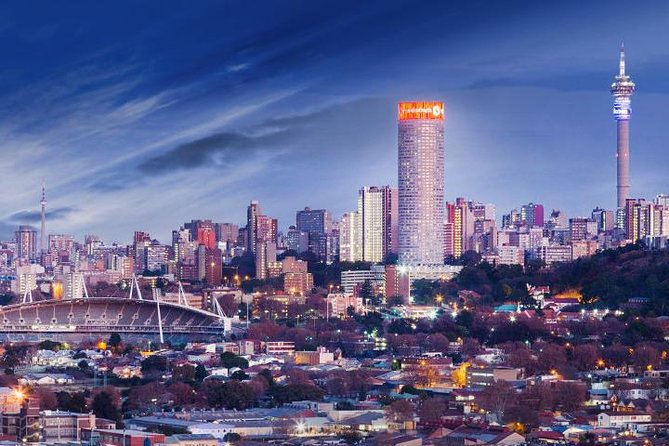
Your route also includes stops connected to central Johannesburg orientation, including the Top of Africa building and Nelson Mandela Square. Even if you don’t go inside everywhere, these are helpful markers in a city where neighborhoods can feel scattered.
Nelson Mandela Square works as a symbolic pause. It puts Mandela’s name in a high-visibility public space, so the later Soweto stops feel connected rather than random. And the Top of Africa building gives you a strong sense of Johannesburg’s skyline scale, which helps later when you look back and try to mentally map where everything sits.
Quick history-and-city stops: stamp mills, Diepkloof, and Orlando Towers
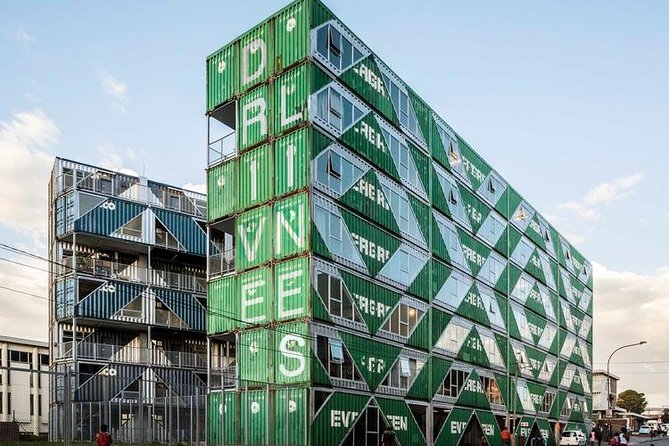
Not every stop is long. Some are fast, but they add meaning to the bigger story.
You may see a stamp battery or stamp mill for about 20 minutes. This is the gold-processing equipment used to crush gold-bearing rock hauled up from underground. It’s a practical, mechanical piece of the gold rush story, which helps you understand how Johannesburg turned raw extraction into massive wealth, and how that wealth shaped power.
You may also stop briefly at Diepkloof Park. The time is short (around 15 minutes), but you’ll be told about Diepkloof’s history as an area tied to hostels built to house large numbers of single male migrant workers. That kind of detail matters because migrant labor is one of the background engines of apartheid-era labor systems.
Then there is Orlando Towers, again a short stop. These are cooling towers known for being the setting for big bungee jumping activity. Even if you’re not planning to jump, the towers are a striking visual anchor in Soweto and a reminder that place names and landmarks can carry new uses long after their original role.
If you’re the type who likes every stop to be deeply guided, the short timings might feel like a tease. On the flip side, if you want efficient overview, these quick hits are exactly what you’re paying for.
Vilakazi Street: where Mandela and Desmond Tutu lived
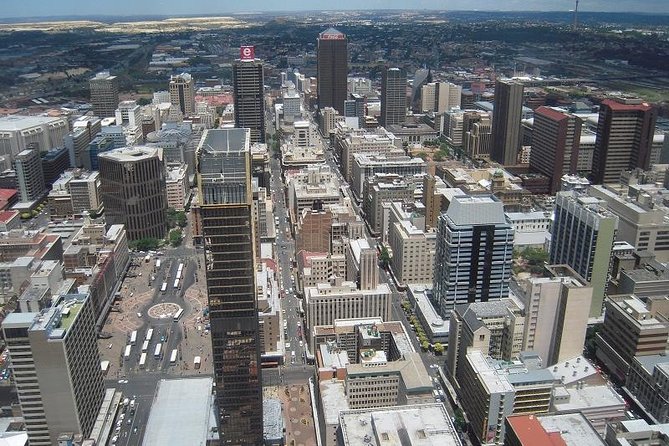
Vilakazi Street is special for one reason, and you’ll hear it right away. It is noted as the only street in the world associated with two Nobel Laureates as residents, with Nelson Mandela and Archbishop Emeritus Desmond Tutu among them.
You’re given about 15 minutes here, but the key point is how the street feels in daily life. The tour frames Vilakazi Street as more than a photo stop. The real focus is on the people who live there now, and the personal stories connected to their homes.
This is also where your day’s themes start stacking up. Earlier you saw institutions of imprisonment and democracy. Now you’re seeing the human side of those changes in a residential street where Mandela and Tutu’s presence is part of the physical geography.
Mandela House (8115 Vilakazi Street): admission included and time well used
If you want one Soweto stop that feels “worth it” even if the day is moving quickly, Mandela House is it. The tour includes time at the Mandela family home at 8115 Vilakazi Street, where they lived from 1946 into the 1990s.
You get about 30 minutes, and admission is included. The house is described as a small face-brick home, and the museum focuses on his life through artwork.
I like that this stop doesn’t try to be everything at once. With a limited time window, a guided, focused museum moment in the actual home base creates an emotional and historical anchor. Later, when you visit memorials tied to June 16, it all feels connected rather than separate.
Hector Pieterson Memorial: June 16 and the memory of a child
The Hector Pieterson Memorial is built around the tragedy of June 16, commemorating 12-year-old Hector Pieterson and the impact of his death. He is described as being the first child to die by a police bullet on that date, and he is buried at Avalon Cemetery, where many apartheid victims are buried.
The tour allocates 30 minutes here, but admission is not included. That’s one of the few places where the “museum extra cost” note matters most, because your time can feel richer when you can step inside and read everything on site.
If you’re visiting with kids or teens, this stop can be heavy. I recommend going in prepared to talk. Ask what they think the memorial is trying to preserve, then connect it to the broader lesson of how apartheid violence reached into everyday life, not just politics.
Mzimhlophe station and the Treason Trial protests: learning through places
Some of the Soweto context comes through passing or short site moments tied to protests during the Treason Trial. The tour includes a stop connected to demonstrations at Mzimhlophe station, described as places where protesters highlighted injustices of the South African government.
The added mention of Home to unique Elephant Houses points to built form and local history that you might notice more if you’re looking closely. Even if you do not get a long guided walkthrough, these cues help you understand that apartheid resistance was happening in specific public spaces, not just in speeches.
This is also where your guide’s role gets important. When someone explains why a station corner matters, it turns a quick stop into a story you remember later.
Townships you pass through: Bulte and the layers of classification
The day also includes brief exposure to township context, including a Coloured township commonly called Bulte, meaning Hills. The naming is connected to mine dumps surrounding the township, and the word Bulte is described as a form of endearment used by residents and neighbors.
It’s not presented as a single major museum moment. It’s more of a geography and social-history thread, so you understand how apartheid categorized people and how the physical environment, like mine dump terrain, shaped settlement patterns.
In a short day, you’re not expected to learn everything. But you’ll leave with a clearer mental map of how Johannesburg is layered, socially and physically.
Price and logistics: where the $107.48 value really comes from
At $107.48 per person, the headline price is reasonable when you consider what’s included and what it saves you.
Here’s what you get for that cost:
- Air-conditioned vehicle (big deal in a hot day, and it reduces transit friction)
- Bottled water
- All fees and taxes
- A private setup, meaning your group does the schedule
- Some admissions are included, like Constitution Hill and Mandela House
- Maboneng Precinct admission is free
- Several quick stops have no admission requirement
What may cost extra:
- Apartheid Museum admission is not included
- Some other stops are also listed as admission not included
Also note that lunch is optional. Lunch can be added, but lunch and snacks are not included in the standard listed inclusions.
So the best value approach is simple: plan for museum entry where required, pack your patience for a day that moves, and use the guide’s time wisely. If you’re the type who wants to read every plaque and slow down, you might feel the pace. If you like a structured overview, the pricing matches the format.
The guide experience: smooth coordination and real neighborhood context
This is one of the strongest parts of the day, based on what I’ve seen in how the tour is described. Lesiba, in particular, is named in connection with a very personal style of guiding, one that mixes practical logistics with neighborhood-level explanations.
What you should look for in a good guide here is flexibility. The tour description suggests a focus on coordinating pickup details and making the day work, including returning you in time if you have a flight later. That matters because Johannesburg schedules can get stressful, and you do not want to spend your day arguing with logistics.
The private format also helps you steer the day. If you care more about Soweto than the city stops, or you want to spend more time at memorials, you can ask. A guide who knows where you are and what you want can often adjust the flow without derailing the main plan.
Who should book this tour, and who should pick a different option
This tour is a great match if:
- You have limited time and want a high signal Johannesburg overview
- You want apartheid history taught through major sites, not just a single museum
- You prefer private, air-conditioned transport over crowded public transit
- You like guided context, especially for places that are emotionally and politically heavy
You might want to choose something else if:
- You prefer long museum time at each stop, especially at the Apartheid Museum
- You hate a schedule where some stops are brief
- You want meals and snacks handled for you, since lunch is not automatically included
The tour also says most travelers can participate and service animals are allowed, which is helpful if you need that flexibility.
Should you book it?
Yes, if you want the fastest path to understanding Johannesburg’s major stories in one day. The strongest reasons to book are the combination of Constitution Hill, Soweto’s core landmarks, and the efficient private transport that makes it realistic.
Just go in with two expectations set clearly. First, the day is designed to cover a lot, so you will not have “all day” at every site. Second, the Apartheid Museum admission is not included, so budget for it and plan your timing so you are not forced to rush through one of the most significant parts of the route.
If you want a guided, structured, emotionally serious history day with practical comfort, this one fits that brief.
FAQ
How long is the Johannesburg Historical, Apartheid Museum & Soweto tour?
The duration is listed as 1 to 7 hours (approx.), depending on how your day is paced.
Is pickup available for this tour?
Yes, pickup is offered.
Is the transportation air-conditioned?
Yes. You travel in an air-conditioned vehicle.
Is this a private tour?
Yes. Only your group will participate.
Do I need admission tickets for everything?
No. The tour includes some admissions, like Constitution Hill (admission ticket included) and Mandela House (admission ticket included). The Apartheid Museum is not included, so you should plan for that.
Is lunch included in the price?
Lunch is not included by default, but it can be added. Snacks are also listed as not included.
Are there days and set operating hours?
Yes. It runs Monday to Tuesday, from 8:30 AM to 1:30 PM, within the stated date range.
What about water?
Bottled water is included.
Is the Apartheid Museum admission included?
No. Admission to the Apartheid Museum is not included.
What is the cancellation policy?
Free cancellation is available if you cancel up to 24 hours in advance of the experience start time. If you cancel less than 24 hours before, you will not get a refund.
More Soweto tours
- Johannesburg: Hop-On Hop-Off Bus with Optional Soweto Tour
★ 4.6 · 985 reviews - Johannesburg Hop-On Hop-Off City Tour with Soweto Option
★ 4.5 · 768 reviews - Half-Day Tour of Soweto Tour
★ 4.5 · 712 reviews - Soweto: Walking Tour with a Local Guide and Lunch
★ 4.9 · 648 reviews
More apartheid-history tours
- Half Guided Day Tour of Soweto And Apartheid Museum
★ 5.0 · 356 reviews - Ultimate Johannesburg Soweto Experience with Apartheid Museum
★ 5.0 · 313 reviews - Soweto: Hop-On Hop-Off Bus, City Tour and Apartheid Museum
★ 4.5 · 250 reviews - Johannesburg and Soweto Apartheid Full Day Tour w/Lunch
★ 4.9 · 219 reviews
Newest reviews around Johannesburg
- Johannesburg: 3-Day Panorama Tour with Kruger Park Safari★ 5.0 · 7 reviews
- Drakensberg Mountains. Tugela Gorge and Amphitheater Hike★ 5.0 · 7 reviews
- 5-Day Kruger National Park Safari including Breakfast and Dinner★ 4.5 · 7 reviews
- Aerial cableway Hartebeespoort Halfday tour★ 4.5 · 7 reviews
- Soweto Township Tour★ 5.0 · 7 reviews
- Private Safari Tour: Pilansberg National Park Big 5★ 5.0 · 7 reviews
- Historical and Cultural Interactive Experience of Soweto★ 5.0 · 7 reviews
- Soweto Tour★ 5.0 · 7 reviews
Apartheid History Tours, compared.

Soweto /Johannesburg and Apartheid Museum Guided Full Day Tour
Read our review →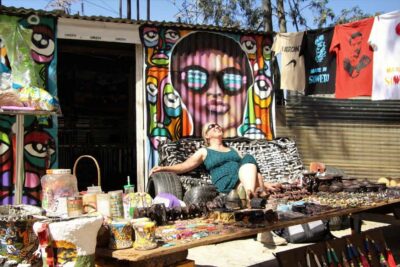
Jo’berg in 1 Day: Soweto, Apartheid Museum & City Tour
Read our review →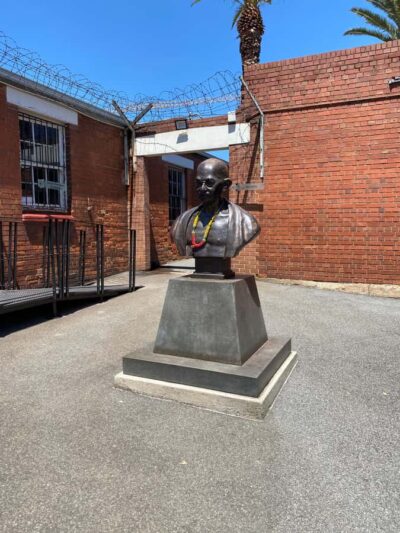
Full-Day Tour with Soweto and Apartheid Museum
Read our review →
Full-Day Soweto, Apartheid Museum and Lunch Tour
Read our review →
Half Guided Day Tour of Soweto And Apartheid Museum
Read our review →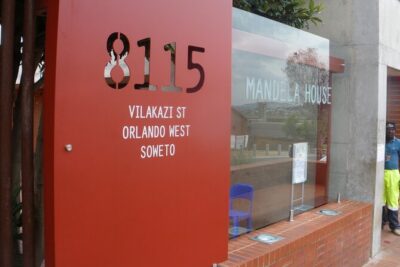
Ultimate Johannesburg Soweto Experience with Apartheid Museum
Read our review →
Hop-On Hop-Off Bus, City Tour and Apartheid Museum
Read our review →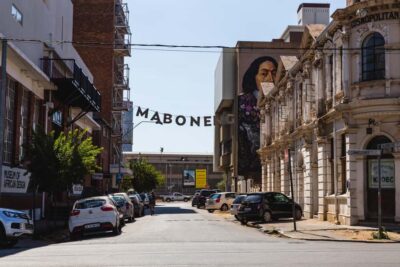
Johannesburg and Soweto Apartheid Full Day Tour w/Lunch
Read our review →Browse the lists this tour appears in