
If you want Johannesburg that feels like a story in motion, this is a smart way to see it. You’ll start at Constitution Hill, then move through museums, campus art, and the inner city to understand how democracy, labor, and creative culture overlap. I especially like the mix of human-rights history plus arts on the street, and I also like how the route keeps you moving via local transport, not just a walking checklist. One possible drawback: with just about 3 hours, you won’t have time for deep, independent museum wandering.
I also like the small group size (up to 7), which makes it easier to ask questions without the guide losing the thread. Pickup is offered, and you get a mobile ticket, so the day runs smoother than you might expect in a big city.
If your main goal is only one thing, like pure museum time or only street art, this may feel a bit split. But if you want the whole Johannesburg “city evolution” picture, it’s a solid, well-paced blend.
Key highlights worth your attention
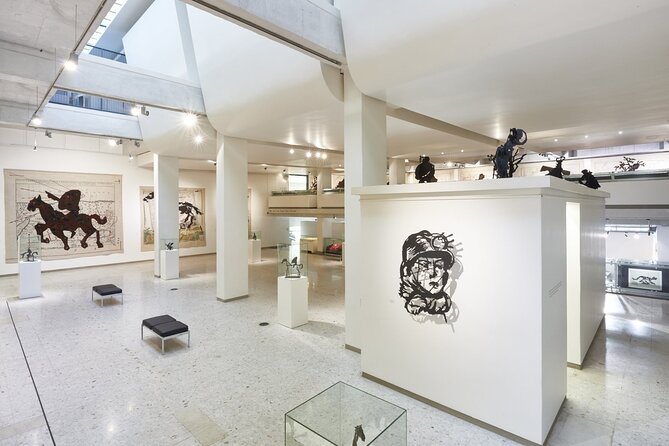
- Constitution Hill’s prison-to-rights transformation sets the tone, with an admission ticket included
- Wits University and the Wits Art Museum bring art into the same conversation as education and ideas
- Inner-city landmarks like Braam Square, Oriental Plaza, and a bridge crossing tie history to how people live now
- Museum Africa’s continent-wide focus is included, with enough time to actually enjoy the exhibits
- Market Theatre’s apartheid-era role lands the cultural angle at the end of the route
- Small group, local transport, and a guide who explains what you see helps everything make sense
Constitution Hill Human Rights Precinct: where the story starts
Plan to arrive with a sense of focus. This tour begins at Constitution Hill Human Rights Precinct, at 11 Kotze St in Braamfontein. The meeting point is set up for a clean start, and your tour clocks in at about 3 hours total.
You’ll spend around 25 minutes at Constitution Hill, and the admission ticket is included. This place matters because it’s not only a memorial. It’s a former prison complex that has been transformed into a human rights precinct, and it includes the Constitutional Court of South Africa. That combination is why the stop works so well on a city evolution tour. You’re not just looking at old stones, you’re seeing how the country reframed a brutal past into an argument for rights.
What I like about this start is how it gives you a reference point. When later you look at labor power, university influence, or theatre as resistance, you can connect the dots back to the rights theme first.
Practical tip: wear comfortable shoes. Even if you’re not doing a long walk, you’ll be standing and moving through a meaningful site where your attention matters.
More Museums in Johannesburg
- Soweto /Johannesburg and Apartheid Museum Guided Full Day Tour
★ 5.0 · 932 reviews - Jo’berg in 1 Day: Soweto, Apartheid Museum & City Tour
★ 4.8 · 524 reviews - Johannesburg: Full-Day Tour with Soweto and Apartheid Museum
★ 4.8 · 478 reviews
Wits University, Wits Art Museum, and COSATU House: ideas plus power
From Constitution Hill, the route shifts to Braamfontein and university space. Next up is COSATU House, the headquarters of the Congress of South African Trade Unions (COSATU). This stop is short, about 5 minutes, and it’s free.
Even with a brief timing, it’s a useful contrast. Constitution Hill sets the rights framework. COSATU points to another kind of influence, organized labor, and how collective pressure shaped South Africa’s political direction. You’ll get the big picture without being stuck in one place too long.
Then you move to the University of the Witwatersrand, usually called Wits. You’ll be on-site for about 25 minutes, and you’ll also visit the Wits Art Museum, with admission included. The museum sits on campus, and it’s known for holding a collection of South African and international art. That sounds broad, but on this kind of tour, “broad” is actually an advantage. You’re learning how art can sit inside institutions, not only hang on museum walls.
This is also where the best guides do their work: they explain why art and learning belong in the same conversation. One review highlighted how the guide connected the background of significant downtown sites, and that same approach shows up again here. You come away with a better sense of how places are linked, not just separately impressive.
If you’re hoping for a full art immersion, note the time is limited. You’ll get highlights and context, not an hours-long museum deep dive. Still, it’s a strong way to avoid the all-museum or all-street-art trap.
Braam Square, Mandela Bridge, and Oriental Plaza: inner-city texture you can read
After the university and labor stops, you shift into the streets and squares that help Johannesburg feel real.
Braam Square is next for about 15 minutes. It’s free, and it has undergone significant revitalization in recent years. The point of this stop is not to admire a building like a landmark postcard. It’s to see how public space works when the city is changing. You get a feel for the rhythm of the area and how people move through it day to day.
Then you cross Nelson Mandela Bridge for about 10 minutes, free. This is a short transit moment, but it matters because it physically links neighborhoods on your route to Newtown. When a tour uses real city crossings like this, you understand the geography better. Johannesburg stops feeling like disconnected dots.
Next comes Oriental Plaza for about 20 minutes, free. This building complex was originally built in the late 19th century as a series of warehouses and shops, and in the early 20th century it was transformed into a shopping center for the city’s growing population. It’s the kind of place where you can feel layers of Johannesburg commerce and everyday life without needing an intro lecture for every era.
Here’s the value in this segment: you learn to read the city. You start noticing patterns like reused spaces, shifting functions, and how redevelopment reshapes what people expect from a place.
Museum Africa: African history across past, present, and future
Museum Africa is one of the best opportunities on the route to slow down. You’ll have around 35 minutes here, and admission is included.
This museum focuses on the rich and diverse history of Africa, using exhibits and artifacts that aim to cover the continent’s past, present, and future. It also includes interactive displays. Even if you only have a short window, interaction helps you engage rather than just walk past glass cases.
What I like about Museum Africa on this specific tour is that it broadens the context. The earlier stops talk about South Africa directly, especially rights, labor, education, and civic change. Museum Africa then widens your frame, so you end the tour with more than a single-country timeline. You finish with a stronger understanding of how cultural identity and history are presented in a modern museum setting.
If you’re the type who reads every sign, you might still feel time pressure. But 35 minutes is enough to hit the main exhibits, especially if your guide points you toward the best sections to notice.
More Walking Tours in Johannesburg
- Soweto: Walking Tour with a Local Guide and Lunch
★ 4.9 · 648 reviews - Soweto Walking Tour with Lunch
★ 5.0 · 288 reviews - Johannesburg: Local Food Tasting Guided Walking Tour
★ 4.7 · 192 reviews - Johannesburg: City Centre Walking Tour
★ 4.8 · 152 reviews
Market Theatre: culture as resistance, and the closing note
You end at Market Theatre, at 56 Margaret Mcingana St in Newtown. You’ll also spend about 20 minutes here, and this stop is free.
Market Theatre is known for its role in the South African cultural landscape during apartheid. It provided a platform for artists to express themselves freely and challenge the oppressive regime. On a city evolution tour, that makes a lot of sense. Rights and power aren’t only in courts and offices. They’re also in performance. The theatre becomes a public place where ideas can push back.
This stop also works as a satisfying closing note because it pulls together the earlier themes. Constitution Hill is about rights. COSATU is about organized labor and power in public life. Wits and its art museum show ideas in an institutional setting. Market Theatre shows ideas in public art, where audiences are part of the story.
One review nailed what this kind of ending is supposed to do: the guide’s explanations made the sites feel connected, not random. And more than one person pointed out the guide helped them feel safe and comfortable while moving around. That matters, especially when you’re navigating a major city by foot and short transport segments.
Food and how the day tends to flow at street level
The tour format includes local transport, and the route is built to keep you learning while you move. Many people also describe a food component at the end, with a local braai option and a platter that can feel like lunch. That’s not a small detail. A meal stop is where the day becomes less scripted, and it can help you decompress after a heavy history start.
If you’re a planner, do this: eat a proper breakfast but don’t go too heavy. Then you’ll have room for what comes near the end. If you have dietary needs, ask when you book, because the data I have here does not list specific options.
Also, your timing matters. Starting at 10:00 am means you should expect to finish before you’re totally wiped out. If you have afternoon plans, this is easier to fit than a full-day museum crawl.
Price and value: is $37.02 a good deal?
At $37.02 per person for an approximately 3-hour tour, this is priced like a focused experience, not a long sightseeing bus day.
The value comes from the included admissions. Admission tickets are included for Constitution Hill Human Rights Precinct, the Wits Art Museum, and Museum Africa. That means a big chunk of your ticket costs are handled upfront. Stops like COSATU House, Braam Square, Nelson Mandela Bridge, Oriental Plaza, and Market Theatre are free. So you’re paying for guiding, structure, and access, while not paying admission every single step.
The small group size, up to 7 travelers, also improves value because your guide can keep the pace tight and answer questions in the moment. One review specifically praised how the guide was professional, knowledgeable in a practical way, and friendly. Another mentioned the guide kept them feeling safe while moving around the city.
If you’re visiting Johannesburg for the first time and want a route that hits major themes without making you coordinate transit and tickets yourself, this is a strong fit. If you already know you want only one museum, then it might feel like you’re splitting time. But if you want connections, this price makes sense.
What to expect from the guide and the pace
This tour is built around explanation. The best part is not only where you go, but how you’re taught to look at it.
I’ve seen consistent praise for guides who are personable and committed, especially a guide named Sean connected with SkyTravel ZA. People described him as super friendly and very knowledgeable about the background of significant downtown sites. They also mentioned the tour feeling like a relaxed afternoon with someone who actually cares, not a lecture that just recites dates.
You should still expect an active pace. Some stops are 5 to 10 minutes, so don’t plan on stopping for extra photos at every corner. The durations are part of the design, to keep you moving through the city evolution story.
One more thing: at least one group noted an extended civil rights day feel with extra sites. That suggests the guide may adjust timing around special days. If your travel dates include public holidays, you might see small changes. Don’t count on them, but it’s a reason to book with an operator that runs a flexible, small-group day.
Who this walking tour suits best, and who might skip
This is a good pick if you:
- Want a guided route that links rights, labor, education, art, and culture in one morning
- Prefer small group dynamics over crowds
- Like context, not just photos of famous buildings
- Want a taste of Johannesburg without planning transit and tickets separately
It might be less ideal if you:
- Want a long, unhurried museum day with zero jumping around
- Are only interested in one theme, like theatre, street art, or one single museum
- Need extensive downtime breaks. The schedule is tight by design.
Should you book this Johannesburg City Evolution, Arts and Museums Walking Tour?
Yes, if you want a first-time Johannesburg route that feels like a connected story. Starting at Constitution Hill gives you the rights framework. Wits and its art museum add the education and art layer. COSATU gives you labor context. Then you shift into inner-city spaces like Braam Square and Oriental Plaza, and close with Museum Africa and Market Theatre so the arts and activism land together.
Book it soon. The average booking window is about 96 days in advance, which suggests this one is popular enough to plan ahead. If you’re going to spend only a short time in Johannesburg, this is one of the best ways to use it wisely.
FAQ
How long is the Johannesburg City Evolution, Arts and Museums Walking Tour?
The tour is about 3 hours.
What does the tour cost?
It costs $37.02 per person.
Is pickup available?
Yes, pickup is offered.
Is it a walking tour only?
It is described as a walking tour, and it also includes local transportation during the experience.
Are any entry tickets included?
Yes. Admission tickets are included for Constitution Hill Human Rights Precinct, the Wits Art Museum (on Wits University campus), and Museum Africa. Other stops listed are free.
Where does the tour start and end?
It starts at Constitution Hill Human Rights Precinct, 11 Kotze St, Braamfontein, Johannesburg, and ends at the Market Theatre, 56 Margaret Mcingana St, Newtown.
What group size should I expect?
The maximum group size is 7 travelers.
What is the latest I can cancel for a full refund?
You can cancel up to 24 hours in advance for a full refund, and you must cancel at least 24 hours before the experience’s start time.
Newest reviews around Johannesburg
- Johannesburg: 3-Day Panorama Tour with Kruger Park Safari★ 5.0 · 7 reviews
- Drakensberg Mountains. Tugela Gorge and Amphitheater Hike★ 5.0 · 7 reviews
- 5-Day Kruger National Park Safari including Breakfast and Dinner★ 4.5 · 7 reviews
- Aerial cableway Hartebeespoort Halfday tour★ 4.5 · 7 reviews
- Soweto Township Tour★ 5.0 · 7 reviews
- Private Safari Tour: Pilansberg National Park Big 5★ 5.0 · 7 reviews
- Historical and Cultural Interactive Experience of Soweto★ 5.0 · 7 reviews
- Johannesburg: Cradle of Humankind & Harties Aerial Cableway★ 5.0 · 7 reviews
Museums, compared.

Soweto /Johannesburg and Apartheid Museum Guided Full Day Tour
Read our review →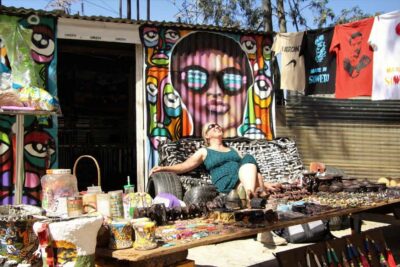
Jo’berg in 1 Day: Soweto, Apartheid Museum & City Tour
Read our review →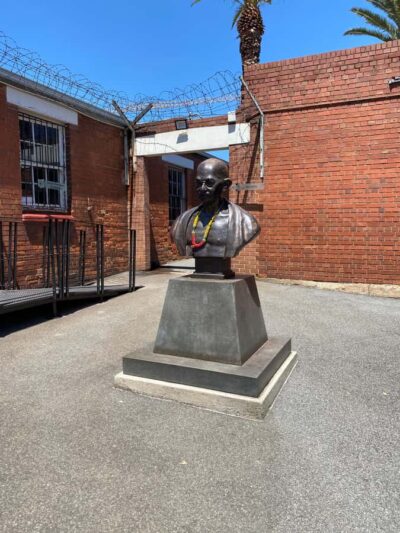
Full-Day Tour with Soweto and Apartheid Museum
Read our review →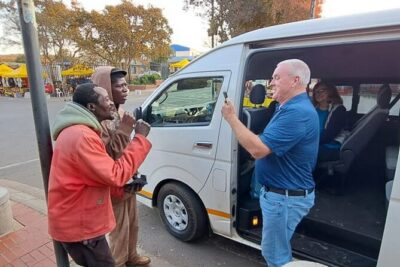
Full-Day Soweto, Apartheid Museum and Lunch Tour
Read our review →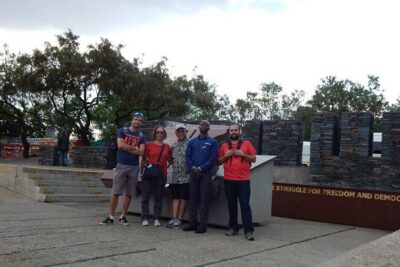
Half Guided Day Tour of Soweto And Apartheid Museum
Read our review →
Ultimate Johannesburg Soweto Experience with Apartheid Museum
Read our review →
Hop-On Hop-Off Bus, City Tour and Apartheid Museum
Read our review →
Museum of Contemporary African Art: Fast-Track Zeitz MOCAA
Read our review →Browse the lists this tour appears in