Reviewed · CAPE TOWN TOURS
South African Cultural Biltong-Making Experience in Cape Town
What makes Soutie’s Biltong Making Experience in Cape Town interesting is that it teaches the full biltong process in a cozy home setting, with real cultural storytelling layered in. I love the hands-on feel, and I love that you hear Afrikaans language and South African food history while you taste and learn with Greg and Lindi.
One thing to consider is that biltong is all about curing and drying over time, so this is a lesson and sampling experience, not a quick grab-and-go snack stop where everything is finished for you on the spot.
Key highlights you will actually care about
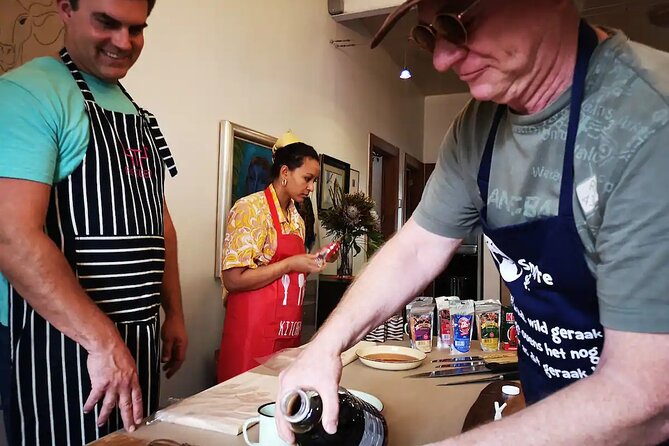
- Small group, max 6 people, so questions do not get lost in the crowd
- Sea Point meeting point at 165 High Level Rd, with the session ending back there
- Hands-on biltong basics, from meat choice to seasoning, curing, and storage
- Vegan biltong option that they position as surprisingly good
- Afrikaans culture with practical language bits, plus stories tying food to people
- Food-and-music vibe, with Boeremusiek and brewed chicory coffee served in a tin mug
In the Sea Point vooorkamer: what the workshop feels like
This is not a big-tour production. You meet in Sea Point at 165 High Level Rd, and the experience takes place in a cozy lounge space they call the voorkamer. The setting matters because you can actually talk, ask why you do something, and learn in a relaxed way instead of sitting and watching.
You also get something rare in food classes: the hosts do not treat biltong like just a technique. Greg and Lindi weave in Afrikaans culture and the story of how biltong fits into South African life. The result is part practical food workshop, part warm conversation, and part light entertainment.
Plan for about 1 hour 30 minutes. That is enough time to learn the workflow, taste samples, and get some hands-on practice with making sticks, but it is still short. If you prefer long, slow classes with tons of repetition, you may want to balance this with other Cape Town food stops later.
Put these Cape Town options head to head
- Wine Tour: Paarl, Franschhoek & Stellenbosch incl 3 wineries
★ 5.0 · 3,940 reviews - Cape Town: Hop-On Hop-Off Bus Tour with Optional Cruise
★ 4.8 · 3,929 reviews - Cape Town: Cape of Good Hope & Penguins Day Tour with Pickup
★ 4.7 · 3,362 reviews
Biltong 101: how it differs from American jerky
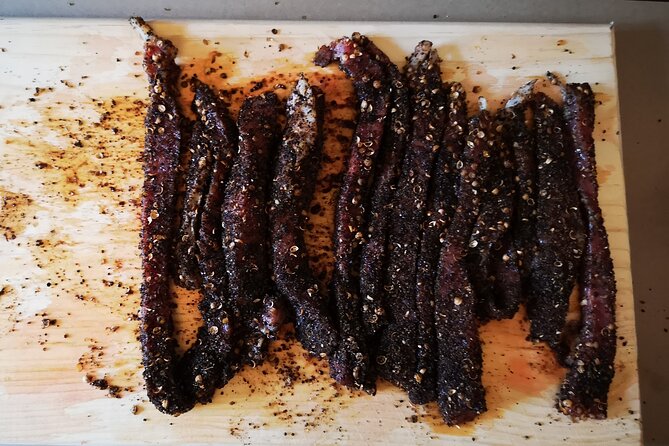
Biltong is one of those foods that can sound familiar until you taste it. The workshop explains that biltong is South African dried meat, made with beef, game meat, or ostrich, and seasoned with a spice blend that is distinctly South African.
Here is the practical angle for you: if you have only eaten American jerky, biltong is different enough that your expectations should reset. The workshop frames it as a separate tradition, not just another snack.
You’ll also learn where it comes from, because that context changes how you think about the steps. They talk about Khoisan hunter-gatherers as the origin point, then the pioneers of the Great Trek adding spice, and the hosts connect their English and Afrikaans family background to the wider story of South Africa. Even if you skip the history part, the takeaway sticks, because it explains why the seasoning and the cure matter so much.
Meat choice, cuts, and seasoning: your hands-on biltong session
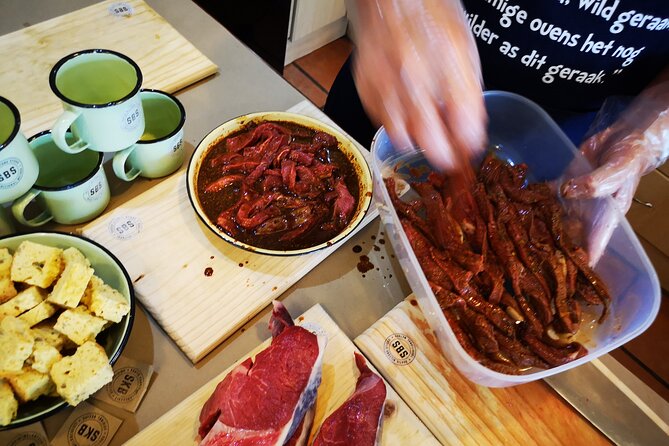
The core of the experience is the process itself. You are taught the basics of making biltong sticks, including how to select your meat, cut it, season and marinate it, and then understand curing and storage.
In the hands-on portion, you are not just tasting. You get the chance to prepare biltong sticks, which is the part most people end up remembering. That practice helps you see what changes when you cut meat into strips, how seasoning gets distributed, and why the cure is treated as something more than just “salt and time.”
The workshop is also careful to make this feel doable at home. You’ll hear practical explanations for what to look for and why certain steps exist, not just a show of spices. And because the group is small, Greg and Lindi can answer questions as they come up, including how to handle your own meat choice if you later decide to make it yourself.
One helpful mindset shift: think of the class like learning a method, not collecting a recipe. You’ll come away with the logic for meat choice, flavor building, and the way curing fits in. That is what lets you adapt later if you use different cuts or want a slightly different spice balance.
Curing, drying, and storage tips you can use later
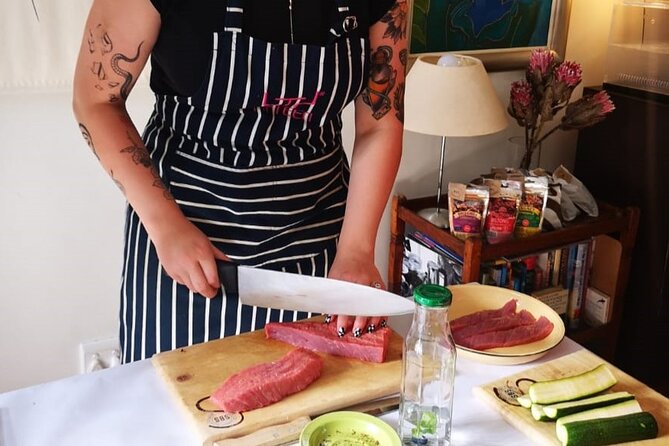
Even though the session itself is about 1 hour 30 minutes, you are taught the steps that happen over longer time. They cover curing and storing, which is the part that separates biltong from a quick snack.
The value here is learning how to think about the cure stage. When you understand curing and storage, you stop guessing. You know that the seasoning is not only for flavor, it also plays a role in the curing process, and you learn how to treat the finished biltong correctly once dried.
Greg and Lindi also set expectations in a real way. You will eat and sample biltong sticks during the workshop, and you may be able to take sample sticks along, but the real skill is knowing how the process works so you can recreate it. If you have ever been disappointed by homemade dried meat projects before, this kind of “process-first” guidance is exactly what you want.
Something different for the Cape Town list:
- Zipline Cape Town – From Foot of Table Mountain Reserve
★ 5.0 · 3,179 reviews - Cape Town: Table Mountain Cable Car, Hop-On Hop-Off Bus Tour
★ 4.6 · 3,157 reviews - Cape Point and Boulder’s Penguins Full Day Tour
★ 5.0 · 3,118 reviews - From Cape Town: Big Five Game Reserve with Lunch
★ 4.6 · 2,409 reviews
Afrikaans language and South African roots in everyday stories
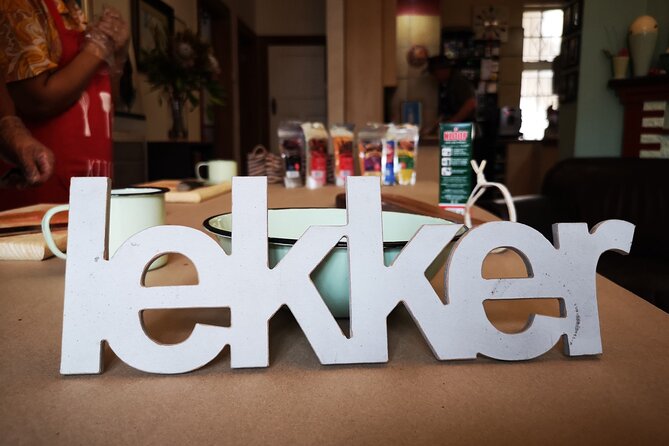
Food classes can become too academic, or too shallow. This one hits a middle lane: the history is explained in a conversational way, tied to the people behind it.
You’ll learn about the origins of Afrikaans, explained as the only European language born in Africa. That line is memorable, but the bigger win is how they connect language to identity and everyday life.
The hosts also talk through their personal mix of backgrounds, describing how an English Soutie married an Afrikaans Boeremeisie. That is not just a fun anecdote. It becomes a way to understand how food traditions travel and change, and how different influences can end up shaping one national flavor.
They also include history tied to biltong directly:
- Khoisan hunter-gatherers and the early idea of preserving meat
- Great Trek pioneers adding spice
- The evolving South African mix that makes biltong what it is today
You’ll even pick up a few local expressions. The goal is not to turn you into a language student. It is to help you chat naturally when you hear Afrikaans in Cape Town, and to make your food ordering and conversation feel more connected.
Boeremusiek, moerkoffie, and Karringmelkbeskuit: culture you taste
A big reason this experience gets strong ratings is the vibe. You are not sitting in silence while someone explains meat science. You’re in a home setting with folk music, catchy Afrikaans songs, and a coffee moment that feels very local.
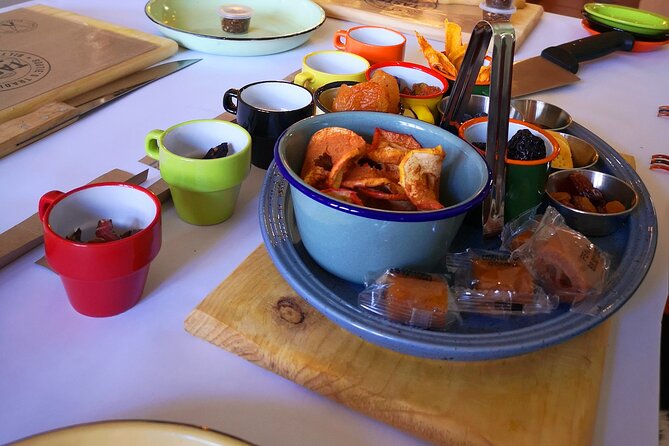
They serve moerkoffie, a strong brewed chicory coffee, and it comes in a tin mug. It sounds like a small detail, but it is the kind of ritual that makes the whole session feel like you stepped into someone’s world for a short time.
You’ll also taste a piece of Soutie’s homemade karringmelkbeskuit. It is a sweet snack that gives you a break from the salty, spiced biltong. In practice, that helps you enjoy the tastings without feeling overloaded.
Boeremusiek does the same job. It keeps the tone light and friendly. And because the group is small, the hosts can connect stories to what you are hearing and tasting, instead of just talking at you.
Vegan biltong plus classic tastings: what you sample and why it matters
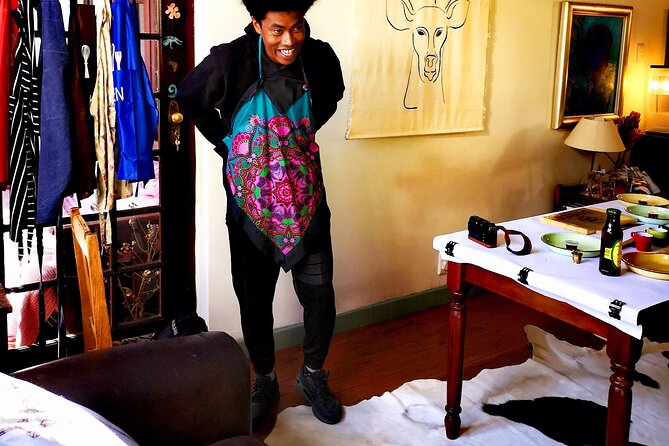
One of the most useful selling points is that there is a vegan option. They describe it as surprisingly good, and the way the workshop positions it matters: it is not a token alternative. They treat it as something you should genuinely expect to enjoy.
You will sample biltong sticks during the workshop. That tasting matters because you are learning a craft, not memorizing a lecture. When you can compare flavors and textures in real time, it becomes easier to understand what the spices and curing do to the final product.
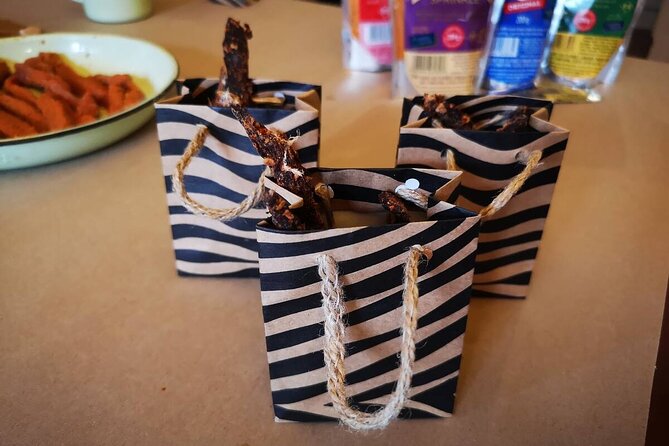
The hosts also give you the chance to eat and possibly take some biltong sticks along. If you want a practical souvenir, this is better than a postcard. You get something you can share, snack on later, and remember as part of a story about South Africa.
Also, if you have a sensitive palate or you do not like cured meats, you still have a path forward. The existence of the vegan option means you can participate fully in the tastings rather than just watching.
Price and value for a $37.58, max-6 workshop
At $37.58 per person for about 1 hour 30 minutes, the price is not the lowest you’ll see in Cape Town. It is also not a stretch for what you get here.
The value comes from four things that add up:
- Intimate group size (max 6), which means more questions answered and more attention
- A hands-on component where you prepare biltong sticks, not just taste
- Multiple elements beyond food, including Afrikaans language basics, biltong origins, and folk music
- The sampling itself, plus time to talk and learn in a relaxed home setting with Greg and Lindi
If you are the kind of traveler who likes “one practical skill plus a cultural story,” this hits your sweet spot. It is also a smart choice if you want something that feels different from the usual Cape Town highlights. You are not just looking at South Africa, you are learning its flavor habits.
Who this Cape Town biltong experience fits best
This workshop is a great match for you if you want hands-on food learning without a stuffy classroom feel. It is also ideal if you enjoy cultural context, even when it is tied to something as simple as dried meat.
Specifically, I think it works well for:
- Food lovers who want to understand method, not just buy snacks
- Travelers who like small groups and conversation
- People curious about Afrikaans language and South African roots
- Anyone who wants a vegan option without giving up on the biltong theme
If you are coming only for a quick meal stop, you might feel like the time is short. And if you are strictly avoiding cured meats, you will still have the vegan alternative to center your experience.
Should you book Soutie’s biltong-making workshop?
Yes, if you want an afternoon that mixes a practical skill with South African culture, this is an easy recommendation. The best part is the combination of hands-on preparation, genuine hospitality, and the fact that Greg and Lindi turn the session into something interactive and friendly.
Book it if you can spare 1 hour 30 minutes and you like learning by doing. Choose it if you want more than a tasting, if you care about the story behind the food, and if you appreciate a small group experience with strong attention.
Skip it only if you want a big, polished production or if cured foods are a hard no for you, even with the vegan option.
FAQ
How long is the biltong-making experience in Cape Town?
It lasts about 1 hour 30 minutes.
How much does the Cape Town biltong-making workshop cost?
The price is $37.58 per person.
Where does the workshop start?
It starts at 165 High Level Rd, Sea Point, Cape Town, 8060, South Africa. The activity ends back at the meeting point.
Is there a vegan option?
Yes. The experience offers a vegan alternative that they say is surprisingly good.
How big is the group?
The workshop has a maximum of 6 travelers.
What is the cancellation policy?
Cancellation is free. You can cancel up to 24 hours in advance for a full refund. If it is canceled because the minimum number of travelers is not met, you will be offered a different date or a full refund.
Newest reviews around Cape Town
- Full Day Wine Tasting in Stellenbosch, Franschoek & Paarl fees included★ 5.0 · 6 reviews
- Taste of Africa – Food & Wine Tasting Experience★ 4.2 · 6 reviews
- Cape of Good Hope and Penguins Private Tour with Entry Fees★ 4.6 · 7 reviews
- Shark Cage Diving★ 4.5 · 7 reviews
- Horse Riding and Wine Tour Cape Town★ 5.0 · 7 reviews
- Half Day Stellenbosch Winelands Private Tour from Cape Town★ 4.5 · 7 reviews
- Cape Town: Constantia Wine Route Tour★ 5.0 · 7 reviews
- Franschhoek Wine Tram Hop-On Hop-Off Tour with Transfers from Cape Town★ 5.0 · 7 reviews
Cape Town Tours, compared.
Wine Tour: Paarl, Franschhoek & Stellenbosch incl 3 wineries
Read our review →

Cape of Good Hope & Penguins Day Tour with Pickup
Read our review →
Zipline Cape Town – From Foot of Table Mountain Reserve
Read our review →
Table Mountain Cable Car, Hop-On Hop-Off Bus Tour
Read our review →
Cape Point and Boulder’s Penguins Full Day Tour
Read our review →