
Cape Town’s streets can feel big and confusing at first, which is exactly why a guided bike tour is such a smart move. In about 3 hours, you get a real sense of where things are, while still stopping for photos and explanation along the way. I also like that the route is built for motion, not just museum time, so you feel Cape Town’s rhythm fast.
Two things I’d put at the top. First, the guides, including standouts like Lucas and Gareth, do a great job turning landmarks into clear stories you can connect to what you see outside your handlebars. Second, you get a chance for local snack stops in Bo-Kaap, including Cape Malay treats at places like Faeeza’s Tea Garden and other home-style stops the route supports. The main drawback to keep in mind is that you do need basic bike confidence, because there are hills and some roads with normal city traffic.
Key moments you’ll care about
- Bo-Kaap streets and Cape Malay snack stops that make the area feel personal, not generic
- Castle of Good Hope as a fort stop you can actually picture and orient around
- Adderley Street and the inner-city grid, so the downtown layout starts clicking
- Company Gardens and St George’s Mall for a quick break in the city flow
- Green Point Stadium and the 2010 FIFA World Cup connection for sports fans and history buffs
- Green Point eco-park plus South Africa’s oldest working lighthouse for a memorable finish
Getting Oriented at AWOL Tours and a Safety Brief That Sets the Tone
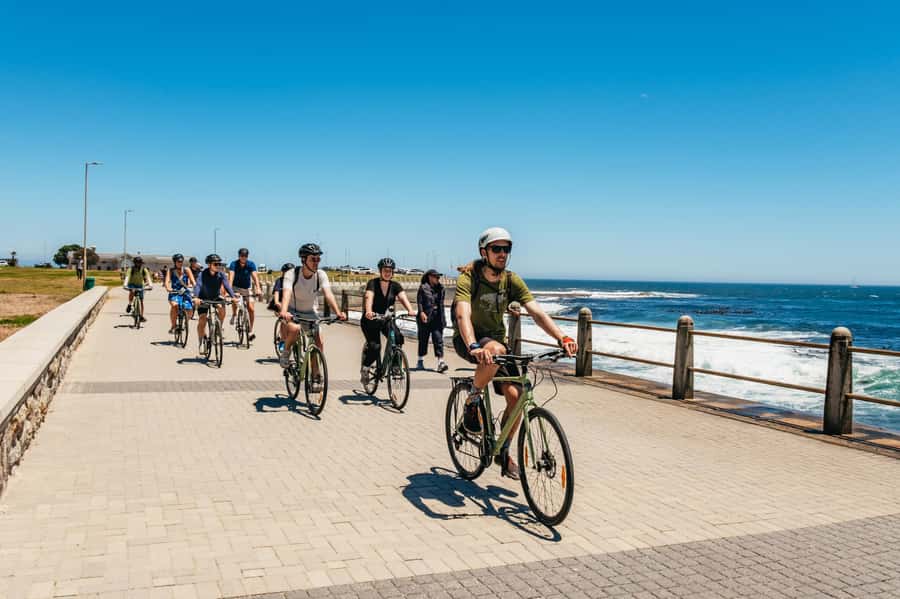
This tour starts at the AWOL Tours office, which makes it easy to find and easy to settle. You’ll get a bike and helmet, then a safety briefing before you roll. That matters because Cape Town traffic is not something you want to guess at.
You should expect a relaxed but structured pace. The tour runs about 3 hours, and you’ll stop often enough to hear the story without losing the sense of movement. Reviews repeatedly highlight that guides watch the roads and keep the group together, even when the group is a mix of confidence levels.
Practical note: you’ll be cycling on real city streets, not closed roads. That’s the whole point, and it also means you should dress for control and comfort.
More Bike Tours in Cape Town
- Cape Town: Atlantis Dunes Quad Bike and Photo Stop
★ 4.4 · 497 reviews - Quad biking Atlantis Dunes Cape Town & Photo Shoot
★ 4.0 · 393 reviews - Cape Town: Atlantis Dunes Quad Bike Tour and Photo Session
★ 4.5 · 322 reviews
Riding From the V&A Waterfront Into Cape Town’s Inner-City Pattern
The route leads you out from the Victoria and Alfred Waterfront area and into Cape Town’s inner city. This is where biking shines for first-time orientation, because you can cross between districts quickly without waiting on traffic lights for long stretches.
You’ll also get the city explained as you pass different kinds of buildings, from modern structures to older landmarks. That’s not just trivia. It helps you read the city later on your own, when you’re walking and deciding what to see next.
A common first-day strategy: do this early in your trip. You’ll come away with a mental map, so your later drives, walks, and restaurant choices feel smarter.
Company Gardens and St George’s Mall Stops That Break Up the City Grind
As you head through the city, you cycle to Company Gardens and St George’s Mall. These are useful stops because they give you a breather from traffic and buildings, even if you’re only pausing briefly.
What I like about this combination is the contrast. Company Gardens is a classic Cape Town public space, while St George’s Mall is downtown commercial life in action. Together, they help you understand how Cape Town balances heritage spaces with everyday city energy.
If you’re the kind of person who likes a quick photo and a short explanation break, these moments fit well. If you prefer long quiet pauses, you might wish the stops lasted longer, but in a 3-hour format, the goal is momentum.
Castle of Good Hope Fort Stop: History You Can Frame With Your Bike
One of the biggest landmark moments is the Castle of Good Hope. It’s a real fort stop, and the tour uses it to connect Cape Town’s history to where you are geographically.
This is a good place for people who love fortifications and city planning, but it’s also helpful if you don’t usually care about military history. Your guide can point out what you’re looking at, and suddenly the area makes sense in context.
The benefit of biking here is that you’re not only learning about the fort, you’re also seeing the surrounding city streets that shape how the landmark functions today. You end up with a stronger sense of location than you would with a purely on-foot stop.
Something different for the Cape Town list:
- Wine Tour: Paarl, Franschhoek & Stellenbosch incl 3 wineries
★ 5.0 · 3,940 reviews - Cape Town: Hop-On Hop-Off Bus Tour with Optional Cruise
★ 4.8 · 3,929 reviews - Cape Town: Cape of Good Hope & Penguins Day Tour with Pickup
★ 4.7 · 3,362 reviews - Zipline Cape Town – From Foot of Table Mountain Reserve
★ 5.0 · 3,179 reviews
Adderley Street and the Street-Level View of Downtown Life
From the fort area, the route includes cycling down Adderley Street. This is one of those streets that feels like a backbone for the city. Even with a short ride, you get a feel for the downtown rhythm.
Guides typically connect street-level details to broader themes of change over time. That can include how different neighborhoods developed and how Cape Town looks and works today.
Small tip: when your guide calls out something specific on the route, pay attention to it early. It makes later cross streets and building styles easier to spot when you’re out on your own.
Bo-Kaap: Colorful Houses, Real Stories, and Cape Malay Snack Time
Bo-Kaap is one of the highlights, and it’s the stop where the tour often feels most human. You explore the former township area and get a close-up look at the famous colorful houses.
But the best part is usually how the guide frames the neighborhood. You’re not just seeing scenery. You’re learning how the area connects to Cape Town’s broader cultural story, and you’re doing it from street level where the details matter.
This is also where snack stops can make the tour extra memorable. You may get Cape Malay food at locations such as Faeeza’s Tea Garden or other Bo-Kaap home-style stops mentioned in guides’ routes. Food isn’t listed as included in the cost details, but these snack moments are a meaningful part of the experience itself, so go in ready to taste and ask questions.
Respect note: Bo-Kaap is lived-in. Keep your movements polite, follow your guide, and treat stops as cultural exchanges, not quick photo opportunities.
Green Point Stadium and Eco-Park Views With a World-Event Connection
Next you cycle past the Green Point Stadium. It’s especially interesting if you like sports history, because it served as a host venue for the 2010 FIFA World Cup. Even if you’re not a soccer fan, it’s a major modern landmark, and it helps show how Cape Town connects global events to local life.
The tour also includes the Green Point eco-park, recently landscaped. This is a good transition space, moving you from dense inner-city streets toward an area with more room to breathe.
What makes this section valuable is pacing. After the older sites and the neighborhood learning, the Green Point stretch feels like a shift in mood. You still get explanation, but the setting helps the information stick.
The Oldest Working Lighthouse in South Africa: Small Stop, Big Sense of Place
One of the tour’s finishing moments is a stop at the oldest working lighthouse in South Africa. Even though it’s brief, it can land well because it’s both visual and practical.
Lighthouses are easy to understand in a city context. They remind you that Cape Town isn’t only history and neighborhoods, it’s also a working port and coastline shaped by navigation and safety.
If you’re someone who likes ending on something scenic rather than ending back at an office feeling like you just checked off sights, this lighthouse stop gives you a stronger last impression.
Shared Group vs Private Bike Tour: How to Choose Your Comfort Level
You can join a shared group or book a private or small-group option. If you like meeting people and you don’t mind some variety in cycling comfort, the shared format can be great value.
If you want quieter conversation, tighter pacing, or you’re a more cautious cyclist, private or small groups may suit you better. Reviews often praise guides for managing groups smoothly, but the best way to reduce stress is matching your style to the group setup.
My practical advice: if you’re new to bike tours in cities, consider private. You’ll get the same core sights, and you may feel calmer with less crowd energy in busy moments.
What to Wear and Know Before You Ride: The Stuff That Actually Matters
This is a bike tour, so clothing matters. Bring comfortable shoes and cycling clothing. Avoid high-heeled shoes, skirts, valuables, and loose clothing. That’s not being fussy. Those choices affect how safe you feel and how well you control your bike.
Your comfort also depends on your confidence. The tour is described as suitable for all ages and fitness levels and tailored to needs, which is great on paper. At the same time, one review notes that some roads have normal traffic and hills, and that can be tricky if you are not confident.
So here’s the balanced move: if you can ride a bike at an easy-to-moderate pace and you’re comfortable with stop-and-go streets, you’re likely fine. If you’re brand new, start with gentle practice before the tour, or choose a private option and mention your comfort level in the safety briefing.
The Guides Are the Difference: What Consistent Praise Tells You
The most consistent high praise across the guide names is about personality and control. People describe guides like Lucas, Bradley, Shaun, Leilo, Eric, and others as friendly, funny, and caring, with a strong focus on road safety.
There’s also a repeated theme of good storytelling. Guides explain the history and contemporary character of Cape Town in ways that make you feel like you understand what you’re passing. It’s not only facts. It’s connections, and it shows up especially around Bo-Kaap and major landmarks.
If you get a guide who runs a smooth ride, you’ll notice it immediately. The group stays organized. Stops feel timed. And the tour feels like it flows rather than snapping between random points.
Price and Value: Is $100 per Person Fair for 3 Hours?
At $100 per person for 3 hours, this is not a budget-only activity, but it also doesn’t feel inflated for what you get. You’re paying for three things that are hard to replicate on your own in the same time:
- A guided route that strings together major areas like Bo-Kaap, the Castle of Good Hope, downtown streets, and Green Point
- Bike and helmet included, so you skip rental logistics
- A guide who helps you interpret what you see, so the stops matter beyond photos
Food and drinks are not included, so plan on buying what you want at snack or meal time if you’re hungry. Still, the presence of snack stops in Bo-Kaap can add real value, because it turns the cultural experience into something you taste.
For best value, do this when you’re fresh in town. Early-day orientation is where the cost starts to pay you back quickly.
Who This Cape Town Bike Tour Best Fits
I think this tour is ideal for first-time Cape Town visitors who want a strong starter map in a short window. It’s also a good match if you like walking-and-history experiences but want a faster way to cover distance.
You’ll likely enjoy it most if you:
- Want to see both modern and historic areas in one loop
- Enjoy short explanations at multiple landmarks rather than one long stop
- Are comfortable riding on city streets with a guide pacing the group
It’s not suitable for people with mobility impairments, since it’s an active cycling format. And if you are very risk-averse about hills or traffic, start by confirming your comfort level with the team before you go.
Should You Book This AWOL Tours Cape Town Bike Tour?
If you want a practical, story-led way to connect Cape Town’s neighborhoods and landmarks, I’d say book it. The mix of Bo-Kaap, the Castle of Good Hope, downtown streets like Adderley Street, and Green Point Stadium gives you a tour that feels like Cape Town, not a list of random sights.
Choose it especially if you like guided interpretation and you want the ride to do the heavy lifting for orientation. If you’re worried about cycling confidence, consider a private or small-group option and be honest about your comfort during the safety briefing.
FAQ
Where does the tour start?
You meet at the activity provider’s office, AWOL Tours.
What is included in the price?
The tour includes a bike and helmet, plus a guide.
How long is the tour?
The duration is 3 hours.
What languages are the guides available in?
Live tour guides are available in English, German, and French.
Is food included?
Food and drinks are not included, but local snack opportunities may happen during the tour.
Is the tour suitable for mobility impairments?
No. It is not suitable for people with mobility impairments.
Newest reviews around Cape Town
- Cape Town: Half-Day Guided City Sightseeing Tour by Bus★ 4.8 · 7 reviews
- Cape Town to Cape Point Private Day Tour★ 4.5 · 7 reviews
- Abseiling Table Mountain★ 5.0 · 7 reviews
- Table Mountain Group Hike – Solo Travelers welcome★ 4.1 · 7 reviews
- Private Tour:Cape of Good Hop>Chapman’s >Penguin>Seal island★ 5.0 · 7 reviews
- Pre-Booked Ticket Robben Island Half-Day Tour from Cape Town★ 2.8 · 7 reviews
- Cape Town Airport and Hotel Private Transfers★ 5.0 · 7 reviews
- Table Mountain, Boulder’s Penguins & Cape Point Private Tour★ 4.5 · 7 reviews
Cycling Tours, compared.


Quad biking Atlantis Dunes Cape Town & Photo Shoot
Read our review →
Atlantis Dunes Quad Bike Tour and Photo Session
Read our review →
Atlantis Dunes Quad Bike & Free Sandboarding Tour
Read our review →
WILDX Atlantis QUAD BIKE ADVENTURE + PHOTO OPS CAPE TOWN
Read our review →

Browse the lists this tour appears in